Thursday, January 26, 2017

Republic Day Celebration and its Specialty for Me | India's Republic Day

Happy Republic Day to all of you, my Dears.


Republic Day is celebrated by Indians to mark the occasion of India being proclaimed as a Republic from this 26th January Day of the year in 1950.

A "Republic" refers to the form of government where governing power resides with the elected representatives of the people of the country. The elections are conducted throughout the country in which all people above the age of some minimum age limit (either 18 or any other limit that is fixed by different countries as their norms) have the voting power to elect leaders to govern them. The whole country is divided into states or regions and each state or region has many constituencies within them for governing purpose. Each constituency is contested by many candidates of different political parties and one of them gets elected for that constituency according to the number of votes scored by him. These winning candidates again elect their leaders as CM of a particular state. The CM forms his government with the approval of the elected candidates by selecting the other ministers. The same thing happens for electing the country's central government also. All the voters elect their leaders for the Parliament through general elections. The elected parliamentarians, thereafter, elect their leader who becomes the Prime Minister of the country. And, he forms the central government by choosing the ministers with the approval of other elected leaders.

The government thus elected by the people of the Republic governs the state or country according to some constitution formed by the laws and mutual consent of the peoples' representatives. Our first constitution was prepared by B.R. Ambedkar and came into force with effect from January 26, 1950.

The first general elections in our country were held in November 1951 according to the new constitution of India after her becoming a Republic. The elections continued until February 1952 and the first Parliament got announced declaring Jawahar Lal Nehru as the First PM of Republic India.

So, we are celebrating each and every year on this Date, 26 January, as the Republic Day.

We salute our Country. We salute our martyrs who fought for our Independence and gifted us the independence on 15th August 1947.

These national festivals remind me of my forefathers who have also fought for the Independence of our country by taking an active part in the independence struggles and movements. My grandfather used to be referred to as Gandhiji of a village named Tallarevu near Kakinada of Andhra Pradesh during an early 20th century. My uncles were born while my grandfather was in jail. So, they were named as Satyagrahacharya (born during the non-cooperation movement) and as Pathakacharya        ('pataak' means Flag and it refers to the Indian National Flag).

Our country abodes people of different cultures speaking different languages and yet they are united and bonded. They love to be called as Indians and feel always proud to be Indians.

We salute our National Flag by hoisting it with great respect and pride. We salute our soldiers and award gallantry awards to them. We salute our Scientists, Litterateurs, and all other great personalities whoever contributed and are contributing to the growth and development of our country in each and every field.

We celebrate the festival with sweets and flowers.

This festival is further associated with my God also for me and my family.

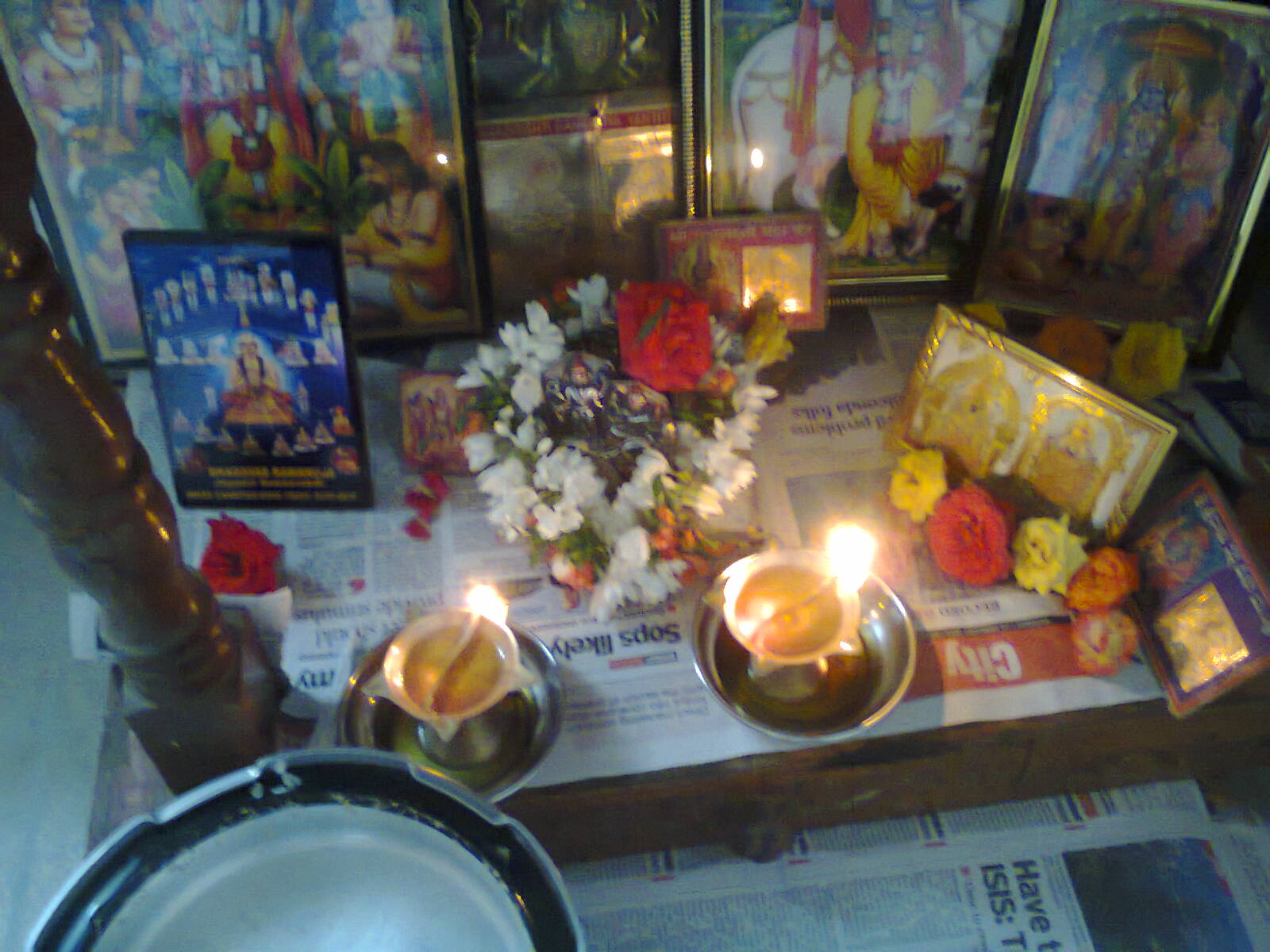
Just as it brought a people's republic and happiness for the people of our country, our God arrived in our house on this day some more than 30 years ago in the form of tiny silver idols. We installed the idols of Lord Narayana and Goddess Sri Lakshmi on this day in a small wooden temple in our puja room on that day in 1984 or 85. From that day, each year, we are celebrating this day as the birthday of our God also besides celebrating the Republic Day.

So, January 26 is a very special day for me in both the cases.

Friday, January 13, 2017

Thiruppavai- Paasuram 30 - "Vanga kadal kadaindha Maadhavanai Keshavanai"


This "vangakkadal kadaintha" is the last of the literary garland of thirty paasurams composed by Goda Devi (Andal) while performing her Pavai nombu ritual. She designed this ritual to provide people with an accessible spiritual path to liberation from all worldly sorrows. She explains where she got this idea and how she designed it. She affirms that whoever follows her path by performing this ritual will reap the fruits of the ritual (just as she did) through the blessings of Lord Vishnu or Sriman Narayana, by observing Dhanurmasam or the sacred Pavai Vrat.

Tiruppavai- Paasuram 30


Vanga kkadal kadaindha Maadhavanai KEsavanai
ThingaL thirumugaththu sey izhayaar senRu iRainji
Anga paRai konda vaaRtai aNi pudhuvai
Paingamala thaNNeriyal bhattar piraan kOdai sonna
Sanga thamizh maalai muppadhum thappaamE
Ingu ipparisuraippaar eerirandu maalvarai thOL
Sengan Thirumugaththu Selva Thirumaalaal
Engum thiruvaruL petRu iNbuRuvar embaavaay


Meaning of this paasuram

Thus, the gopis who are shining moon-like faced (adorned by new clothes and ornaments), attained moksha by approaching the Lord, who is called Madhavan (because of possessing Goddess Lakshmi obtained during the churning of the Milky Ocean) and Keshavan (because of the curly hair head).

Here, the gopikas referred to by Goda Devi are not her companions. Because she was referring to the times of Sri Krishna's incarnation. She learnt through scriptures regarding a similar ritual performed by the gopikas of Gokul and got inspiration from them.  
 
That story of their attaining moksha is told by Goda, who is the daughter of Bhattar piraan (a superior or great person is referred to as Piraan), who used to wear the garlands prepared with Tulasi and lotus beads around his neck.

Whoever recites this garland of Tamil songs (especially recited in groups) honestly without any break will obtain eternal bliss, now itself and thereafter, through the overwhelming grace of that Lord, who has beautiful eyes with a red hue and divinely faced and glorious with all good qualities.

Inner, in-depth meaning of this Thiruppavai Paasuram 30

Andal tells people, through this last paasuram, about her authorship and about her father cum teacher (Achaaryan), and regarding the benefit of performing this Pavai nonbu or Vrat. She also hints at the supreme qualities and benevolence of God, who will definitely bless His devotees with the eternal bliss or moksha.

It asserts the importance and valuable worthiness of the Thiruppavai, the authenticity of its writer, who is the disciple of a great, worthy Achaaryan, the quality and essence of the contents of this work, and the great benefits obtained by reciting or hearing of these paasurams with sincere honesty.

A concluding paragraph
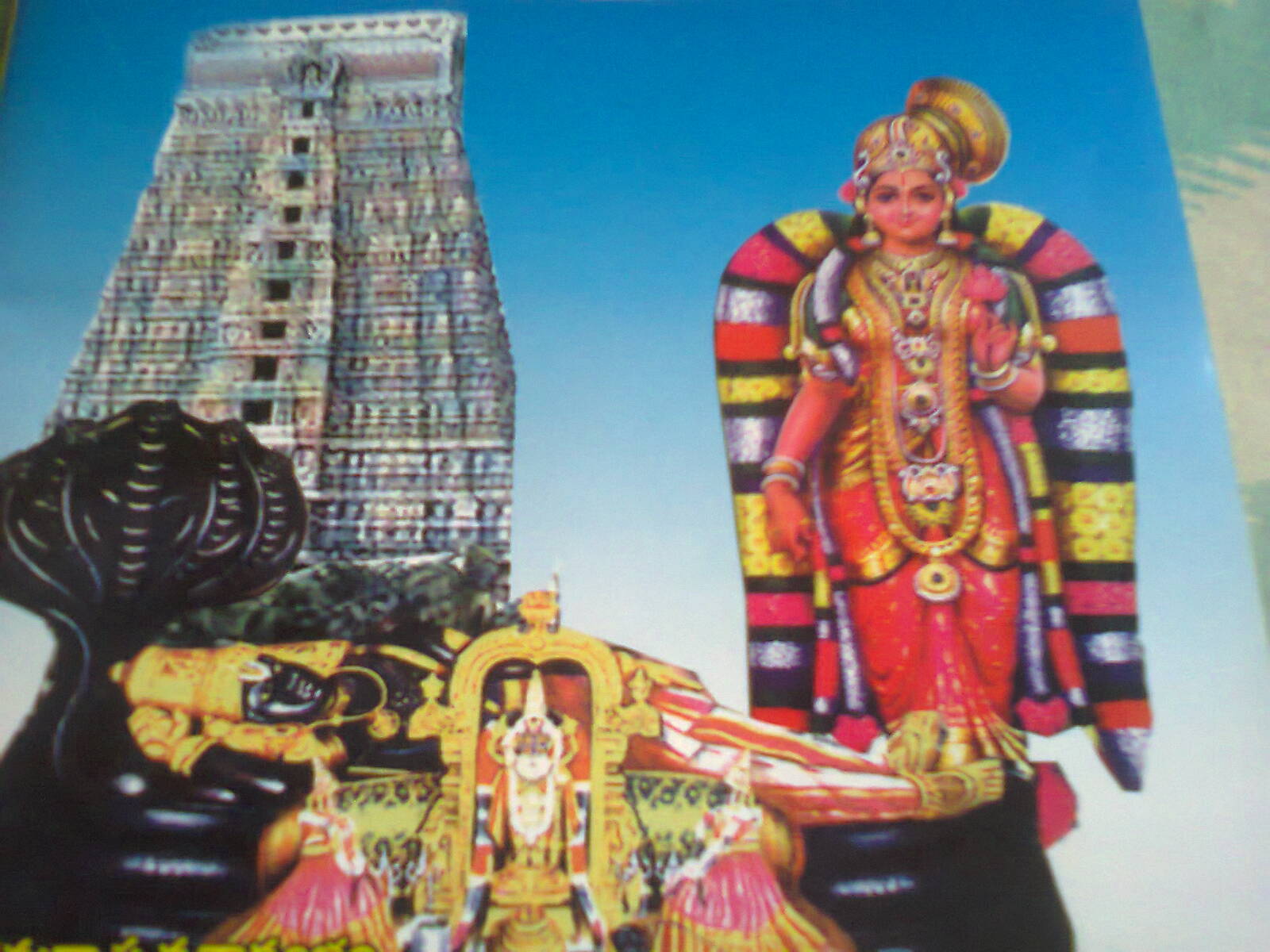
Goda Devi performed the Vrat of Thiruppavai by preparing a garland of 30 paasurams in this manner and dedicating one paasuram each day to Lord Vatapatra Shaayi at Srivilliputtur temple. After completion of this penance by Goda Devi, the Lord, one day, appeared in her father's dreams and also in the dreams of the King and a temple priest of the Sri Rangam Temple, and instructed them to arrange for the marriage of Goda Devi with Himself, the Lord, inside that temple of Sri Rangam. So, Goda married God and became an idol to his side, and has been worshiped as Andal since that time.

For the full story of Andal, read at this link.

Thursday, January 12, 2017

Thiruppavai- Paasuram 29 - "SitRum siRukaale vandu"


Andal asserts through this paasuram her determination and commitment to observe the penance or performance of Paavai to attain their goal of moksha. She reveals her wish to serve him throughout the coming seven births and forever. To accomplish this wish, she requests him to keep away all other desires and thoughts from their minds.


Tiruppavai- Paasuram 29


SitRum siRu kaalE vandhu unnai sEviththu unn
PotRaamarai adiyE pOtRum poruL kELaay
Pettam meyuththu unnum kulaththil piRandhu nee
KuttEval engaLai koLLaamal pOgaadhu
Ittai paRai koLvaan anRu kaaN Govindhaa
Ettaikkum EzhEL piravikkum undhannOdu
UtROmE yaavOm unakkE naam aatseyivOm
MatRainam KaamangaL maatRelOr embaavaay

Meaning of this Paasuram

Oh, Lord! Daily, we come early in the morning, before dawn, to visit you (to have a darshan of you). 

After the darshan bhaagyam, we are pleased and sing prayers at your lotus-like feet in great pleasure.

We are blessed to have you born in our clan (even though we are very ordinary beings). 

Due to this attachment with you and our utter ignorance, you cannot escape without blessing us.

Oh, Govindha! We are not simply here to get the Parai from you.

We want to maintain an eternal close relationship with you throughout the coming seven births and beyond, so that we can perform our humble services to you in all ages.

Oh, Lord! Please remove all the obstacles (other worldly desires faced by us) and fulfill our desires.

Inner, in-depth meaning of this Thiruppavai Paasuram 29

Through this paasuram in the voice of gopis, Goda Devi spreads the message that those who discard all their material desires and enjoyments and indulge in the sincere services of God with pure love, attachment, and submission, seeking no returns from Him for those services rendered, will be rewarded by the Lord, on his own, without your requests. Because he loves his true devotees and grants them the permanent bliss of moksha, removing all the physical barriers coming between Him and His devotees.

Wednesday, January 11, 2017

Thiruppavai- Paasuram 28 - "Karavaigal pin senru"


In this paasuram, the gopikas acknowledge their ignorance as they are simple cattle feeders and do not know what is good or bad, and ask for his forgiveness if they committed any mistakes by addressing him in short names. 

They further state that their lives have been purified by his birth in their clan and seek his grace and union.


Paasuram 28


KaRavaigaL pin senru kaanam serndhu uNbOm
ARivonRum illaadha aay kulaththu undhannai
PiRavi peRundhanai puNNiyam yaam udayOm
KuRai onRum illaadha Kovindhaa undhannOdu
uRavEl namakku ingu ozhikka ozhiyaadhu
ARiyaadha piLLaigaLOm anbinaal undhannai
SiRu pEr azhaiththanamum seeRi aruzhaadhE
IRaivaa nee thaaraay paRaiElOr embaavaay

Meaning of this paasuram

Oh, Krishna! We are very simple, ignorant people walking behind the cattle to the forests and eating there without even washing our hands.

In such a clan, you have arrived taking your birth. This is our great fortune. Our lives have been blessed by that.

Oh, Govinda! You are complete with all qualities and so capable of removing all our weaknesses. Due to your grace, we are abundant in our lives.
 
This relationship between us cannot be undone even if we try to break or undo it.

We are like little children, unaware of any manners. So, kindly forgive us as we have addressed you with little or short names until now. Don't be angry with us.

Oh God, bless us with the PaRai (moksha).

Inner, in-depth meaning of this Thiruppavai Paasuram 28

Through this paasuram, Andal refers to the ignorance of people in realizing the greatness of God.
We are unaware of His paramathmathathvam and His being the only savior of all our problems. 

But once we get some hints and glimpses of His image, we can recognize His Omnipotence and Omniscience qualities. 

Then, we discard all our lust for material pleasures and long for His union. We realize that we are too inferior and discard all our ego and pride to seek His pardon and refuge.

Tuesday, January 10, 2017

Thiruppavai- Paasuram 27 - "Koodaarai Vellum Seer Govinda"


In this paasuram, Andal, along with the Gopikas, reveal to Lord Krishna their intentions that they would like to be gifted magnificent costumes, bangles, and jewels as a reward on the completion of their Vratam. She says that the reward should be the most cherished one that can make the world attest to the greatness of this Tiruppavai ritual.

Paasuram 27


Koodaarai vellum seer Govindhaa, undhannai
Paadi paRai kondu yaam perum sammaanam,
Naadu pugaLum parisinaal nanRaaga;
SoodagamE, thOzh vaLaiye, thOdE, sevippoovE,
PaadagamE, enrenaiya palgalaNum yaam aNivOm;
Aadai uruppOm, adhan pinnE paal sORu,
Mooda neyi peydhu muzhngai vaLi vaara,
Koodi irundhu, kuLirndhu ElOr embaavaay ||

Meaning of this Paasuram

Oh, Lord, you are capable of winning even the hearts of your opponents with your grace!

Bless us with the world's most supreme reward of singing your glories so that the world can know the significance of performing this holy ritual of Tiruppavai.

Adorn us with invaluable bangles, bracelets, shoulder ornaments, rings, studs, and flower-like vertex earrings, anklets, and many more unknown ornaments as our gift.

Then, we will wear the new clothes provided by you and eat with you the milk-food, Paayasam, prepared with lots of ghee, which, while eating, overflows from the hand to the elbow.

This is our wish, Oh Lord!

Inner, in-depth meaning of this Thiruppavai Paasuram 27

Andal, through this paasuram, refers to the breaking of the fast (after performing the Vrat or penance).

She highlights the unbounded love and grace of the Lord towards His devotees. He blesses them with good results and great rewards when they keep faith in Him and follow his path. The devotees get blessed with His union or Saayujyam.

So, the gopikas want to celebrate the occasion of breaking the penance by wearing new clothes, ornaments, and flowers. They cook the milk-food with jaggery/sugar and a large quantity of ghee and offer it as Naivedyam to God and consume the prasadam in His company.

That is why, on this 27th day of Dhanurmaasam, we prepare the akkaara vadisil (ksheeraannam or milk-food made up of milk, rice, jaggery, ghee, cashew nut, raisin, elaichi, etc.) and eat the same in His presence after offering it as Naivedyam to Him.

Monday, January 9, 2017

Thiruppavai- Paasuram - 26 - "MaalE MaNivaNNaa"

In this paasuram, the gopikas request Lord Krishna to provide them with the requirements for performing this "Pavai." Vrat. You can notice that whatever instruments they asked for are used for his own worship.

Paasuram 26


MaalE maNivaNNaa ! MaargaLi neeraaduvaan
MElaiyaar seyvanagaL vEnduvana, kEttiyEl!
Nyaalaththai ellaam nadunga muralvana
PaalannavaNNaththu un paanjasanniyamE
Polvana sankangaL, poy paadudai YanavE
Saala perumpaRaiyE, pallaandu isaippaarE,
KOla viLakkE, kodiyE, vithaanamE,
Aalin ilaiyaay, aruLElOr! embaavaay!

Meaning of this Paasuram

Oh, Lord, with unbounded love and with the beautiful complexion of blue sapphire gems!

We are to perform the holy bath in this auspicious Maargazhi. Our ancestors have also performed like that.

For this purpose, we seek some tools from you. Please listen:

1) The sound of which trembles all this universe, that milk-like hued Panchajanyam resembling conches; (nyaalam in Tamil refers to the world or Earth)
2) A large musical instrument "paRai";
3) A group of singers to sing "pallandu":
4) Lighting lamps:
5) A flag and
6) A huge tent for shelter.

Oh, All-powerful Lord, please provide all these things.


Inner, in-depth meaning of this Thiruppavai Paasuram 26

Through this paasuram, Andal gives us the message that we should value the age-old customs and traditions of our ancestors. She says that we should follow rituals as per their prescribed principles and practices to maintain the decorum and respect for our customs. 

The ancestors referred to (in this paasuram) can be either our AchAryas or our own family elders and include both.

The bath referred to is the worship here involving the following six steps.

  1. While starting worship, we blow the conch, reverberating the sounds of "Om".
  2. Then we sound the bells and drums.
  3. Next, we decorate Lord with the flowers and recite the Vedic mantras and slokas.
  4. The fourth step is to light the lamps, which refer to the offering of Naivedyam and the lighting of camphor, and singing of Pallandu.
  5. The flag is used during processions of the Lord.
  6. The tent referred to is the cover used for Lord while sleeping.

So, the gopikas required all these tools to worship Him, which is equal to their taking a bath in a spiritual river.

Sunday, January 8, 2017

Thiruppavai Paasuram 25 - "Oruththi maganai pirandu"


In this paasuram, Goda Devi sings the divine tales of Sri Krishna's birth and the enmity between him and the demon Kansa. She says that she and her companions find pleasure in singing his glorious acts, by listening to which even Goddess Lakshmi would become pleased. 

She requests to bless them with the parai, so that they can keep singing on his glories forever.


Tiruppavai- Paasuram 25


Oruththi maganaay ppiRandhu Oriravil 
Oruththi maganaay oLiththu vaLara
Tharikkilaanaagiththaan theengu ninaindha
Karuththai pizhai piththu Kansan vayitRil
Neruppenna ninRa nedumaalE unnai
Ariththiththu vandhOm paRai tharudhiyaagil
Thiruththakka Selvamum sEvagamum yAmpaadi
Varuththamum theerndhu magzhilndhElor embaavaay

Meaning of this Paasuram

You were born as the son of one mother during one night and grew up as the son of another mother.

Oh, Lord! We can't keep thinking about the ways you get involved in rewarding or punishing the acts of people.

You have been like a fire in the belly of Kansa due to his bad acts and due to the failure of all his efforts in killing you.

We have come to seek Parai (moksha) from you.

We will sing the glories of You and about the heroic deeds of You to please You and Nappinnai. 

Please grant us moksha so that our sorrows and problems dissolve, and may we immerse ourselves in bliss.

Inner, in-depth meaning of this Thiruppavai Paasuram 25

God assumes various forms and gets involved in various deeds to protect His devotees and to punish those who create trouble in the lives of His people. We can't understand or question such wonderful deeds of God. 

Even though we do not understand how He rewards the good acts or punishes the bad acts. We should simply submit ourselves to Him and seek the eternal bliss of moksha.

The essence of this paasuram is that the gopis seek permission to perform His worship in His human form and enjoy His company. 

Saturday, January 7, 2017

Thiruppavai Paasuram - 24 - "Anru ivvulagam alandaay"


In this paasuram, the gopikas sing the praise of the Lord in the style of PallAndu (mangaLaasaasanams) after Krishna wakes up and walks towards His throne, accompanied by NeeLA Devi, and gets seated on it. They narrate each amazing feat of Krishna and wish for the wellness of those limbs that performed those miracles.


Tiruppavai- Paasuram 24


AnRu ivvUlagam aLandAy adi pOtRi
SenRangu ththennilangai setRaay thiRal pOtRi
PonRa chchagadam uthaththaay pugazh pOtRi
Kanru kuNilaa eRindaay kadal pOtRi
Kunru kudeyaay eduththaay kuNam pOtRi
VenRu pagai kedukkum nin kayyil vEl pOtRi
EnRenRum un sEvagamE  Eththi paRai koLvAn
InRu yaam vandOm irangElOr embaavaay

Meaning of this Paasuram

During those days when the world was weeping due to the atrocities of the demons, You took the step(s) (measuring the earth and sky with two steps and keeping the third foot on the head of Bali).

Again, in those days, you took steps towards Lanka in the South with the arrows (to kill Ravana).

Then again, you kicked the wheel with force using these feet (to kill the SakatAsura demon in the form of a wheel).

You, again, flew a demon-calf towards another demon in the form of a tree, using amazing force with these feet, to kill both of them simultaneously.

You lifted the mountain Govardhana like an umbrella with such splendid awe using a finger (to protect your people and cattle from the anger of Indra).

Oh, Lord! You hold a spear in your hand that destroys all the enemies. Glory to Thee, oh, Lord!

We have come here today to sing your praises and offer our eternal services, and to obtain the gift of Parai from You. 

Oh, Lord, have mercy on us.

Inner, in-depth meaning of this Thirupaavai Paasuram 24

In this paasuram, Goda Devi not only refers to the different styles of the Lord in killing the demons but also highlights the different gaits of the Lord during His walk from His chamber toward the throne. A gait is the manner of moving one's feet or legs while walking. She describes the Lord's gaits, which are exceptionally worthy of Him alone. The gopis requested the Lord to ascend His throne to listen to their prayers, solely because of the pleasure of viewing His majestic and beautiful gaits. After witnessing this beautiful scene, the gopis were overwhelmed with joy and praised the Lord with shouts of "Glory to Thee" and by recounting His many great deeds at different times.

Friday, January 6, 2017

Thiruppavai Paasuram 23- "maari malai muzhangil"


Krishna gets awakened after the gopikas, accompanied by Nappinnai (NeeLa Devi) herself, plead with Him to awake and heed their requests. Now, the gopis request Him to come out of His bedroom like a lion and sit on the throne to listen to their prayers and grant them the gift of Parai.


Paasuram 23 


Maarimalai muZhanGil mannikkidandhu uRangum
Seeriya singam aRivutRu ththeeviLiththu
VERimayir ponga eppaadum pErundudhaRi
Moori nimirundhu muzhangippuRa pattu
POdarumA pOlE nee poovai poovaNNaa un
KOil ninRu iNGanE pOndharuLi kkOppudaiya
Seeriya singaasanaththu irundhu yaam vandha
Kaariyam aaraayndhu aruLElOr embaavaay

Meaning of this Paasuram

Just like the lion sleeping in a cave shudders its sleep with a loud roar, watching all around fiercely and erecting all its hair, and steps out of the cave majestically, Oh, Lord Krishna, possessing an enchanting hue of bluish complexion, please come out of your temple-like chamber and be seated on your majestic throne, throwing a blessing glance at us while passing by. Oh, Lord, may you, then, listen to the purpose of our coming to you and awakening you so early from your sleep.

Inner, in-depth meaning of this Thiruppavai Paasuram 23

It seems that Andal, here in this paasuram, wanted to elaborate on the previous reference made by her to Lord Krishna as "Yasodhai iLam-singam" in her first paasuram.
 
The attribute of iLam singam is derived from God's form of Narasimha incarnation to save Prahlada and to punish the demon Hiranyakashyap. So, Krishna gets compared with Lord Narasimha in this paasuram and not the animal lion.

Andal indirectly refers to the AchAryAs and their awakened souls (JnAni and JnAnam) and wishes that they should always spread awareness and pave the path for ignorant people to be able to be gifted with His blessings. Nappinnai is one such path shower in Thiruppavai who aids the gopikais in reaching Sri Krishna and, thereby, obtain His grace. Andal herself is a great path shower to all of us as she gifted this Thiruppavai to us.

Thursday, January 5, 2017

Thiruppavai Paasuram -22 - "AngaN maaGyAlaththu arasar"


Thiruppavai paasuram 22 describes the submissiveness of the entire world at the feet of God, with no more egoism to seek His blessings and protection. The gopikas, headed by Goda, and accompanied by the support of NeeLa Devi (Nappinnai), who guided them to the bed of Lord Krishna,  praise Him and appraise Him that they have discarded all pride and ego that possessed them previously, and seek His graceful vision that can wash their sins and purify their body and soul.


Tiruppavai- Paasuram 22


AngaN maaGyaalaththu arasar abimAna
BangamAy vandhu nin paLLikattiRkeezhE
SangamiruppAr pOl vandhu talai ppeyidhOm
KiNgiNi vaay chCheydha thAmarai ppooppOle
SengaN SiRichchiRidhe Emmel VizhiyAvO
ThingaLum Adiththiyanum EzhundaaR pOle
AngaNiraNdukondu engaLmEl nOkkudhiEl
EngaLmEl sAbamizhindheLor embaavaay

The literal meaning of this Paasuram


Just like the vanquished kings released by their ego (on facing your presence or even by hearing your name) have surrendered at your feet by gathering below your bed in groups to serve you, we also have come to rest at the feet of your bed after banishing our pride and ego to receive your protection.

Just like little bell-shaped pearls opening their mouth slowly, please open your lotus-like eyes gradually so that we may bear the radiant glow of your glances.

As if the Sun and Moon are rising at the same time, please look at us with your beautiful eyes with the coolness of the moon and the brightness of the sun, so that all our sins and defects get washed away.

Inner, in-depth meaning of this Thiruppavai Paasuram 22


As human beings, we are always deceived and deluded into believing that we are superior in whatever field we are in. 

We consider ourselves to be the authority here, and that this position, place, or thing belongs to us, and that we can do whatever we like with it because we are independent in all respects. 

But once you become helpless before circumstances and unable to control things, you gradually realize the reality and the existence of something superior that controls everything. You will then discard all your ego and pride and seek help and protection from God. This fact is preached to people through this paasuram.

Wednesday, January 4, 2017

Thiruppavai Paasuram - 21- "EtRa KalanGaL Edhirpongi"

Nappinnai got awakened and opened the doors after the gopis along with Goda Devi pleased her with their praises and requests. Now, Nappinnai also joins with the gopis to awaken Lord Krishna from his sleep.

Thiruppavai Paasuram 21

Etra kalanGaL edhRpongi meedhaLippa
MaatRaadhE paal sorium vaLLal perum pasukkaL
AatRa padaiTTHaan magane! aRiuRaay
OotRam udaiyaay periyaay ulaginil
ThOtRamaay ninRa sudarE thuyilezhaay
Maatraar unakku vali tolaindhu unvaasaR kkaN
Atraadu vandhu unnadi paNiyumaa pOlE
POththiyaam vandhOm pugazhndhElOr embaavaay

Literal, explicit meaning of this paasuram

Oh, Lord, the son of NandagOpan, whose innumerable, big cows pour milk incessantly even before the vessels get changed quickly and thus get overflowing! Please kindly get up.
Oh, Supreme being, Oh Lord! even though you have no limits in this universe and are unreachable, you have taken this human form for us, Oh, the effulgent streak of light! Please awaken.
Just as your enemies, who got defeated and made powerless, come to your house and stand up at your doorsteps in line,  we have come here singing your praise and glory. Kindly listen to our prayers.

Inner, in-depth meaning of this Thiruppavai Paasuram 21

The in-depth meaning of this paasuram is too much complex to understand by us. It is based on some very highly spiritual knowledge. There are some deep explanations to be found on sadagopan.org some of which I am providing here.

The phrase "maatRadhe paal sorium vaLLal perum pasukkaL" is interpreted as referring to the capabilities of brilliant disciples who are able to produce the knowledge derived by them from their previous teachers in exactly the same manner without changing anything in an incessant flow. Their knowledge spills out overflowing but nothing is changed or twisted that has been imparted by their Acharyas. Further, it is mentioned in the same website that "VaLLal perum pasukkaL" refers to the brilliant Acharyas who have been able to pass on the knowledge gained from their previous Acharyas as it is without changing anything. So, the knowledge that has been directly derived from God and Goddess are passed on from generation to generation through this ever-maintained chained relationship of brilliant teachers and brilliant disciples.

The passage "matRaar unakku vaLi tolaindhu un vaasaRkkaN" is interpreted as the gopis surrendering before Lord Krishna telling Him that they have left all their pride and ego (of thinking themselves as the most beautiful gopis after seeing His amazing beauty and virtuous qualities).

Tuesday, January 3, 2017

Thiruppavai Paasuram 20 - Muppaththu Moovar Amararku

In this Paasuram, Goda Devi and her gopis continue awakening NeeLa Devi (Nappinnai) and Sri Krishna.

Tiruppavai - Paasuram 20


Muppaththu moovar amaraRku mun senRu
Kappam thaviRkum kali ye thuyilezhaai
Seppamudaiyaay thiRaludaiyaay settaarku
Veppam kodukkum Vimalaa thuyilezhaai
Seppannamenmulai Sevvaay chchirumarunGul
Nappinnai nangaai thiruve thuyilezhaai
Ukkamum thattoLiyum thandhu un maNaaLanai
IppOde emmai neerattelor embaavaay


The literal, explicit meaning of this Paasuram

Oh, Lord Krishna, who removes the trembling fear of the thirty-three crore angels (it is believed by ordinary people that there are thirty-three crore angles in heaven) by standing in front of them (during their battles with demons), Oh, valorous one, kindly wake up from sleep.
Oh, Lord, who takes care and protects your devotees and possesses enormous strength! You are blemishless in doing so by saving your dependants and punishing their enemies. Oh, blemishless, please wake up.
Oh, Nappinnai! Who possesses a charming body with soft bosoms, red lips, and a narrow waist! Oh, Goddess Lakshmi! Please awaken.
Please give your Lord to us along with a fan (of peacock feathers generally) and a bronze mirror and bathe us in the holy waters just now.


Inner, in-depth meaning of this Thiruppavai Paasuram 20

The number 33 angels or gods, in this context, comprises the total figure of ashTa Vasu (8 vasus), 12 Sun-Gods of Bhagavata Purana, 11 Rudras, and 2 Ashwini Devatas.
Andal tells that Lord Krishna should come even before all to protect us as he does with them.
God always protects his devotees and has an equal attachment with all beings. But, if anybody harms his devotees, He will destroy them.
Nappinnai is regarded here as the Goddess Lakshmi herself. So, she is referred to as Thiru in "thiruve". She is the PurushakAram just like Goddess Lakshmi who always involves herself with God in the protection of devotees. So, the gopis request Her to help them in taking this holy bath by giving them Lord Krishna.

Monday, January 2, 2017

Thiruppavai Paasuram 19 - "Kutthu viLakkeriya"

When Andal praises Nappinnai (NeeLA) and reminds of the duties, she wakes up and wants to open the doors. But Krishna wants to open the door himself and so prevents her from going to the door. So, the gopis now appease both Krishna and Nappinnai again in this 19th paasuram.

Paasuram 19

Kutthu viLakkeRiya kOttukkaal kattil mEl
Metthaina panja sayanathin mEl ERi
Kotthalar pUngudal Nappinnai kongai mEl
Vaitthukidandha malar maarbaa vaay thiRavaay
Maththadan kaNNinaay nee un maNaaLanai
Etthanai pOdum thuyilezha vottaay kaaN
Etthanai yElum pirivaatRagillaayaal
ThatthuvamandRu thagavElor embaavaay

Outer, explicit literal meaning of this paasuram

Oh, Krishna, you are sleeping even when the lights are glowing beside the ivory bed, on the soft mattress (having all the five qualities of coolness, freshness, fragrance, softness, and filled with flowers) resting your broad chest on the lofty bosom of Nappinnai whose braid is adorned with fresh bunches of flowers. Oh, Krishna, please open your mouth (and answer to our calls).

Oh, Nappinnai, whose eyes are dark and wide as if decorated with collyrium lotion! Won't you allow your Lord to wake up even after so long duration to come to us? Won't you bear separation from Him even for a while? It is not just for you or noble on your part.

Inner, in-depth meaning of this Thiruppavai Paasuram 19 

In this paasuram, Andal is referring to the Purushakaara element or nature of Nappinnai and reminds her of this nature and the other important point that Lord is not the possession of a single being. He belongs to all and He should attend to all his people's needs and calls.

The glowing lights refer to the knowledge imparted by teacher or Acharya.
The bed with its four legs refers to the four goals of life - Dharma, Artha, Kama, and Moksha.
The mattress is the five-headed serpent's ShEshatalpam or universe.
MaiththadamkaNNi means the best disciple of her Teacher as Nappinnai always has been close and dear to Lord.


Sunday, January 1, 2017

Thiruppavai Paasuram 18 - Undhu madagaLitRa nodadha

When Krishna does not awake, Goda Devi realizes that she should first awaken Nappinna piRaati (NeeLa Devi) as they are both inseparable and Krishna would not awake without her. So she awakens NeeLa first.

Thiruppavai Paasuram 18

Undhu madhagaLitRan Odaadha thoLvaLiyan
Nandagopalan marumagaLe Nappinnaay
Kandham kamazhum kuzhali kadai thiRavaay
Vandhengum kozhi aLaiththanagaaN Madhavi
Ppandhalmel pal kaal kuzhilinanagaL koovinakaaN
Pandhaarvirali un maiThThunan peRpaada
Chendhaamarai kayyaal Siraar vaLaioLippa
Vandu Thiravai maghindu Elor enbaavaay

Literal, explicit meaning of this Paasuram

Oh, daughter-in-law of the great warrior Nandagopan who is famous for his invincible valor and army of giant elephants and so never faces defeat!
Oh, Nappinnaay! you, whose hair is dark and beautiful with locks, please open the door.
Even the cocks have arrived now making loud noises and even the cuckoo birds sitting on the bower of creeping flower plants have cuckooed many times very sweetly.
Oh, Lady with lofty round fingers! As we want to sing in praise of your Lord, please open the door making a loud noise of the bangles on your lotus like hands, so that He can awaken.

Inner, in-depth meaning of the Thiruppavai Paasuram 18

Here, Nappinnai is the PurushakAram or the important recommendation for reaching Lord Krishna. So, she is to be pleased and requested for seeking the blessings of Krishna.
Now, to appease Nappinna, Goda Devi first praises her father-in-law Nandapopan. Goda is clever enough to know that if she praises Nappinna's father-in-law, she would get much pleased and listen to her requests as Nandagopan is a close relative of Nappinna. Goda Devi praises his great valor and then praises Nappinna's good qualities. She praises her beautiful long hair, her lotus-like hands, and her bangles. She further adds that the shouting of the cocks and the cuckoo birds making pleasant sounds as the signal for people to awaken and indulge in their duties. The cock generally crows three times to awaken people. It is a symbolic reference to the three mantras that are imparted by Vaishnava Acharyas for attaining moksha, the Thirumanthram, Dvayamanthram, and Charama slokam.  So, Andal requests Nappinna to kindly open the door so that Krishna will awake.

The opening of door refers to the removal of obstructions in the path of reaching God. Goda Devi requests Nappinnai to help us in crossing the obstacles in the path of reaching God.