Showing posts with label Hindu festival. Show all posts

Sunday, September 24, 2017

Navratri Festival | Devi Navratri and 9 Forms of Durga

In 2025, Navaratri is celebrated from September 22 to October 1 for ten nights.

Navratri celebrations are among the most important and popular festivals for Hindus worldwide. It is also called Devi Navratri. It is a 9-night festival. 

It is a festival dedicated to worshipping Goddess Durga in her nine forms during the nine days of the celebration, which usually occurs in the last week of September or the first half of October (at the start of the Autumn season). 

According to the Hindu calendar, it is celebrated during the first nine days of the month called Ashwin or Ashwayuja.
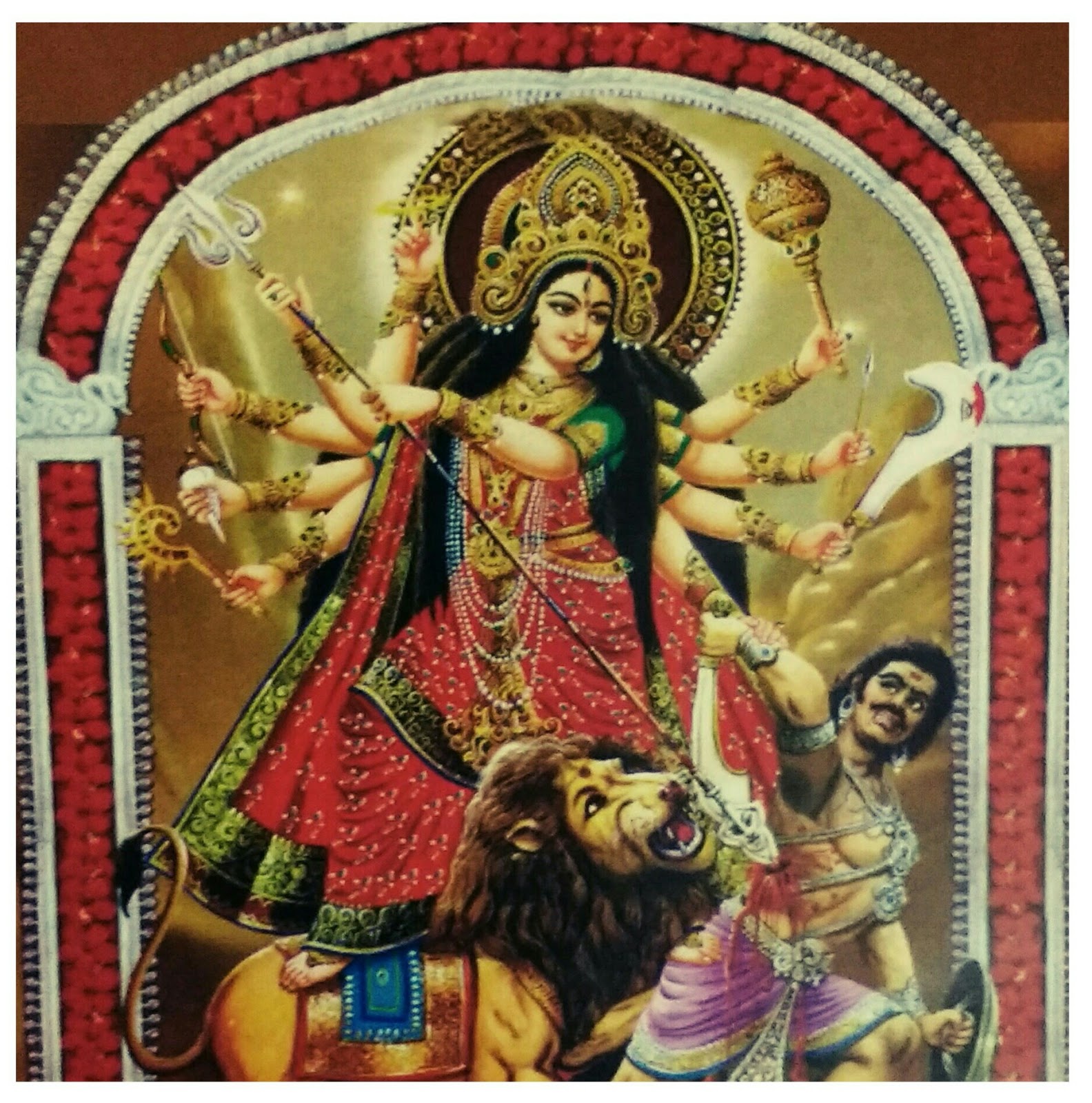


Navratri or Navaratri means nine nights.

Even though people perform worship during the morning times, both at home and in the temples, the most important type of worship takes place during the evening hours during all these nine days.

The tenth day is celebrated as Dussehra.

It is also known as Vijaya Dashami, as it is celebrated to rejoice in the victory of Good over Evil. 

The festival is celebrated to worship the Goddess as the destroyer of evil and protector of people in her different forms of appearance. She is mainly worshipped in three most popular forms as the embodiment of Power/Force (Durga, Parvati), Wealth/Prosperity, and Wisdom/Education.


9 Forms of Durga

Chronologically, the following are the nine forms of the Goddess (or Devi as referred to in Hindu scriptures) according to citations found in many texts.

1) Devi Adi Parashakti or Siddhidhatri:
This is a pure form of energy with no shape, which Lord Shiva worshipped before starting the creation. She appeared on the left side of Shiva. She sits on a lotus and rides on a lion holding Shank, Chakra, Gada, and a Lotus in each of her four hands.

2) Devi Kushmanda:
After taking the form of Siddhidhatri, the Goddess lived inside the Sun so as to release some of the Sun's energy to the Universe and provide life to living beings. She has eight hands holding a Kamandalu, Bow, Arrow, and Kamal with her right hand and Chakra, Gada, Japa Mala, and Pot of Nectar with her left hand. She also rides on a lion.

3) Devi Brahmacharini:
After Kushmanda's form, the Goddess took the form of a Brahmacharin born to Daksha Prajapati. She was supposed to marry Lord Shiva. But Daksha insults Shiva, and she gets self-immolated, vowing to marry Shiva in her next birth. She holds a Kamandalu and a Japa Mala in her hands and walks bare-footed.

4) Devi Shailaputri:
After self-immolation, she takes birth as Shailaputri (Daughter of a Mountain named Himalaya) to marry Shiva. She rides on a Bull, carrying a Trishul and a Lotus in her hands.

5) Devi Maha Gauri:
Shailaputri, after reaching her age of sixteen years, is believed to be extremely beautiful with a splendid and sparkling glow. So, she is called MahaGauri, meaning extremely beautiful. She also rides on a Bull with her four hands holding a Trishul in the right hand, A Damaru in the left hand, and making the Blessing sign with the other right hand and a gifting sign with the other left hand.

6) Devi Chandraghanta:
On marrying Lord Shiva, she begins wearing the half-moon sign on her forehead shaped in the form of a bell. So, she is known as Chandraghanta. She mounts a tigress with her ten hands. She holds the Arrow, Bow, Lotus, and Mala of her neck with four right hands, keeping the fifth hand in Abhayamudra (a blessing sign). She holds the Trishul, Gada, Sword, and Kamandalu in her four left hands, posting the fifth hand in a gifting sign (Varadamudra).

7) Devi Skanda Mata:
Skanda is the other name for Lord Kartikeya, the son of Shiva, Parvati. So, she is called Skanda Mata, meaning mother of Skanda. Skanda Mata rides on a fierce lion. She has four hands. She holds Lotus in her upper two hands and holds her son Skanda (who is a six-headed child) with her right hand. She keeps the other left hand in blessing mode.

8) Devi Katyayani:
Katyayani Mata was formed from the waves of anger exuded by all the Gods who were angry with the atrocities of the demons. She was entrusted with the task of killing Mahishasura and other demons. She is red in color and rides on a majestic lion. She holds a Lotus and Sword in her left hand and keeps both her right hands in blessing and bestowing modes.

9) Devi Kali:
This is the most fierce form of the Mother Goddess.
She is black in color and rides on a donkey, killing the deadly demons named Sumbha and Nisumbha in a very frightening manner. She holds both her right hands in Varada (gifting) and Abhaya (protecting) mudras and carries a huge Sword and fierce Iron hook in her left hand.


The Worshipping Sequence of the 9 Forms of Goddess Durga:

Day One: Shailaputri
Day Two: Brahmacharini
Day Three: Chandra Ghanta
Day Four: Kusmanda
Day Five: Skandamata
Day Six: Katyayani
Day Seven: Kali Mata
Day Eight: MahaGauri/ Maa Durga
Day Nine: Sidhidhatri

Navaratri in Vaishnava Sampradayam

In the Vaishnava sampradayam, these Sharad Navaratri celebrations are centered around Mahalakshmi and her nine forms. Each day, Lakshmidevi is decorated in unique forms and worshiped as such. 

Here is a glimpse of these celebrations as announced by ramanuja.org for the year 2024.


For more comprehensive details of Dussehra celebrations like Ram Leela and Vijaya Dashami, you may like to visit this article with full details at this link.
https://vnktchari.blogspot.in/2013/10/dussehra-festival-celebrating-victory.html#.Wc4Rwo-Cy1t

Wednesday, February 26, 2014

Maha Shivaratri | A Most Popular Hindu Festival of Religious Faith


Maha Shivaratri is one of the most important festivals celebrated by Hindus and, especially by the Shaivites in particular, which displays their utter religious faith and spirituality.

This auspicious occasion falls every year on the fourteenth day or Chaturdashi day of New Moon fortnight during the Hindu month of Magha ( it is Phalguna or Phaagun for north Indians). It is generally in the middle of February or the beginning of March month as per the English calendar.


The Stories Behind Maha Shivaratri

It is believed that Lord Shiva is very much fond of this night and he appeared in the linga form (just like a pillar with no form) during this auspicious night. So people began worshipping him in this form from that day every year to celebrate this great occasion.

Another story is that when the milky ocean was being churned to obtain nectar by the angels and devils so as to attain immortality, poison got produced from the ocean before the nectar, and Lord Shiva came to the rescue by swallowing the poison on this night and saved the people of earth from poison. So to celebrate this occasion, they started celebrating this Maha Shivaratri on this day.


There are many more stories regarding the reasons for observing this festival on this day like Goddess Parvati observing penance on this day to please and cool Lord Shiva who was performing pralaya tandava (dance) for the destruction of the whole world and another story narrating that the marriage of Lord Shiva and Parvati took place on this day.


Whatever, the story behind this, this Maha Shivaratri is considered as an auspicious day and whoever keeps penance or performs puja on this night with true devotion to God is said to attain moksha by getting relieved from all sins and with no further birth.


How to Do Shivaratri Puja

On this day, people get up early before morning and bathe in the holy waters before sunrise wherever they are in reach of holy rivers like Ganga, Jamuna, Saraswati, Godavari, Krishna, Kaveri, etc. and other holy lakes and ponds of temples. A dip in holy waters is regarded as most important on all Hindu festivals for purifying the body and soul. Wherever there is no access to such places, they may bathe in their homes and purify themselves.


  • After taking the bath, they wear clean clothes and most of the devotees flock to the temples taking holy water, milk or green coconuts.
  • They apply the holy ash or vermillion to their foreheads before going to temples or on reaching the temples (if the same is not kept at their homes).  
  • In the temple, the devotees perform abhisheka (the act of bathing a divine being) to the Shiva Linga by pouring the water, milk, and coconut water.


  • Abhisheka is done with curd and ghee also. 
  • After bathing the Shiva Linga with all these holy waters, Vermillion, sandalwood powder, turmeric, and kumkum are applied to the Shiva Linga and worship with flowers and bel leaves.
  • After worship, some special puddings, sweets, fruits, and honey are also offered to God as Naivedya.


Most devotees keep fast on this whole day. They may take fruits and milk, etc. But some keep severe fast taking only water.

Worship is done by chanting the panchakshara mantra " Namah Shivaya" throughout the day.

During the night, they perform the Abhishek (pouring holy waters) either one time or four times with equal gaps.

Throughout the whole night, they keep waking and listening to or chanting the Shiva Purana and other hymns in praise of Lord Shiva. They may watch movies also based on the stories of Lord Shiva.


The Panchakshara Mantra and Slokas of Lord Shiva

The Shiva Panchakshara Mantra is made up of five Sanskrit vernaculars of 'na' ma' shi' va' ya'. When it is pronounced in a combined form it is spelled as "Namah: Shivaayah" by adding 'h' in spelling ma with shi and adding another h at the end.

It is believed to increase the effect of the panchakshara mantra by adding "om" in the beginning and "namaha" at the end, so the full mantra is chanted as follows:

"Om Namah Shivaya Namah" by adding the 'Omkaarnaada'  which is the essence of creation and, 'Namah' as offering reverence to God.

For Hindi and Telugu versions of Shiva Panchakshari lyrics and their meanings in English text, view at this link.

The panchakshara slokas are based on each of the five letters in the mantra "Namah Shivaya"

Shiva Panchakshara Stotram  ( slokas)

1) Nagendra haaraaya trilochanaaya
    bhasmangaragaya maheshwaraya
    nityaya suddhaya digambaraya
    tasmai nakaraya namah shivaya
2) mandakini salila chandana charchitaya
    nandishwara pramatha natha maheshwaraya
    mandara mukhya bahu pushpa supujitaya
    tasmai makaraya namah shivaya
3) Shivaya gauri vadan aravindaya
    suryaya dakshadhwara nashakaya
    shri neelakantaya vrishdhwajaya
    tasmai shikaraya namah shivaya
4) vashishta kumbha udbhava gautam adi
    munindra dev archita shekharaya
    chandra arka vaishvanara lochanaya
    tasmai vakaraya namah shivaya
5) yaksha swaroopaya jata dharaya
    pinaka hastaya sanaatanaya
    sudivya dehaya digambaraya
    tasmai yakaraya namah shivaya

It is the belief and confidence of the devotees that chanting of the Shiva Panchakshara mantra and the slokas with full faith and devotion leads them to self-realization and Moksha.

The sound "om" is considered as the original sound vibrating all over the universe controlling the creation, protection, and destruction of the whole universe. "Namaha" means 'not me' or 'not I'. It tells the fact that ' I ' or 'WE' are not the performers of actions or the enjoyers of results. It signifies that God is the performer and enjoyer of each act and its result.

For more details regarding stories of Shivratri and celebrations in various places of India and other countries, you may refer to other website clicking this link

"Om Namashshivaaya"             

Sunday, September 8, 2013

Ganesh Chauth Festival and The Story of Ganesha - Lord of The Ganas

Ganesh Chauth, also known as Ganesh Chaturthi or Vinayaka Chavithi, is the festival of the Lord of Ganas and obstacles.

Ganesh is a short form of GaNa + isha which means he is the Lord of all Ganas (attendants of God) or different groups of living beings.

Gana word includes, in a larger sense, four types of Ganas namely Devagana, Manushyagana, Rakshasagana, and Bhutagana.

Ganesha is referred to as Vighnesha also which means Lord of all Vighna or obstacles.

Another term used for Vighnesha is Vinayaka (Vighna + Nayaka). Nayaka means head. So Vinayaka means Head or Lord of all vighnas or obstacles. So whoever worships Ganesh is bestowed with the power to overcome obstacles and gain success in all his activities of life.

So, whoever starts a new business or activity is advised to worship Lord Ganesha at first.


Ganesh Chauth is celebrated by Hindus as the birthday of Lord Ganesha on the Chauth or the fourth day of the Hindu month of Bhadrapada masa in Shukla paksha which generally falls in between the period of the second fortnight of August to the first fortnight of September each year.

It is celebrated for 10 days continuously from the fourth day or Chauth to the fourteenth day known as Anant Chaturdashi and the celebrations are widely known as "Ganesh Navaratri".

This festival is mostly popular in Maharashtra, Gujarat, Andhra Pradesh, and Tamil Nadu even though it is celebrated throughout the country.

The Story Behind Ganesh Chauth


The story goes that Lord Shiva, according to Shiv Purana, was returning to Kailash after getting released from the body of Gajasura, an elephant-headed demon with the help of Lord Vishnu. Parvati gets joyous and decides to have a bath to get herself ready to welcome him. Before going to bath, she made the figure of a child with the sandalwood paste that she used to apply to her skin while bathing, breathed life into it, and kept the child as a guard at the doors to not allow anybody while bathing.

 When Lord Shiva enters, the boy stops him as he does not know him. Shiva gets enraged beheads the child and enters in. Knowing this, Parvati weeps for the child. Realizing his mistake, Shiva orders his ganas (or troops) to bring the head of Gajasura (whom he had given a boon before Lord Vishnu ordered Nandi to break open his womb for Shiva's release) and joins the head to the body of the child and makes him alive. From that time, Ganesha came to be known as Gajaanan.

Parvati gets happy and celebrates the occasion inviting all angels, sages, etc.

Later, Lord Shiva makes Ganesha the head of the ganas as he wins the test of bathing in all the rivers of the world and returns first to his parents before his brother Kumaraswamy (with the help of the Narayana mantra bestowed to him by Lord Shiva because of his humbleness and respect to his parents).

 All the angels and the troops celebrate the occasion by offering various kinds of food and fruits to Ganesha. After eating all those offerings, Ganesha returns to his parents and tries to bend down to pay obeisance to them seeking blessings. But due to his heavy belly after eating so much food, he experiences much difficulty in bowing to them seeing which the Moon on the head of Lord Shiva laughs. Immediately the stomach of Ganesha breaks out and he falls down unconscious on the floor with all food scattered out from his belly. Goddess Parvati gets very angry at this with the Moon and curses him that whoever sees him will beget a bad name and ill luck from thereafter.

Lord Shiva cools Parvati and makes Ganesha alive again using his powers on the advice of Brahma, Vishnu, and others.

Later, all people including sages approach Parvati and request her to take back her curse upon the Moon as it is not possible to live in the world without seeing the moon. Parvati realizes their problem and tells that her curse cannot be taken back but it will be applicable for one day only on this day of Ganesh Chauth each year on which day nobody should witness the moon.

Later, after many years, Lord Krishna happens to see the moon in the milk on this day of Ganesh Chauth and he is also not spared from being affected by that curse.

It happened that one king Satrajit once pleased Sun God through his prayers and got a golden jewel. It has some magical powers of producing gold of 160 tulas (one Tula is equal to 10 grams) daily to whoever keeps the jewel with him. After possessing it, the king happens to visit Lord Krishna and Krishna asks him to give it to him. But he does not give it and returns home. After that, one day his brother happens to wear it and go on hunting in the forests where he gets killed by a lion and then as the lion had swallowed the jewel, it gets killed by Jambavantha, an immortal vanara in the shape of a bear of the Ramayana period. Jambavantha ties the jewel to the cradle of his small daughter for playing with it.

When Satrajit finds his brother missing, he accuses Lord Krishna of killing his brother and stealing the jewel. He got this false accusation because of his witnessing moon in the milk. So Krishna immediately goes in search of the man to prove himself innocent and finds the dead body of the person and the body of a lion at some distance. Then following the footprints, he reaches the cave of Jambavantha wherein the jewel was shining brilliantly like a sun tied to the cradle. When he snatches the jewel, the child cries and Jambavantha comes there and fights with Sri Krishna fiercely. The battle takes place for 21 days and then Jambavantha recognizes that it must be Sri Rama of Ramayana period with whom he had requested foolishly for a fight when he was asked to seek a reward for his services. So he realizes his mistake and bows to Sri Krishna and seeks his forgiveness for his sin and returns him the jewel and along with it his daughter also as a gift.

Sri Krishna returns the jewel to king Satrajit after telling him all that had happened. The king feels ashamed for his action and seeks forgiveness from Krishna and gives the jewel to him as a repentance and also requests him to marry his daughter Satyabhama. Lord Krishna accepts Satyabhama but returns back the jewel to keep with Satrajit.

When all the angels, sages and human beings all come to know of these incidents, they reach Sri Krishna and ask for his help in seeking remedy for saving themselves also from the curse of Goddess Parvati. Then Sri Krishna gets pity on them and tells them to remember this story and read it or hear it from others on this day of Ganesh Chaturthi each year after offering prayers to Ganesha and take the prasadam and then they will not get any bad name on seeing the moon on that day. So from that day onwards, everybody began performing Ganesh Pooja and hearing of the story of Lord Ganesha and the Shamanthakamani story of Sri Krishna each year on this auspicious day.

How to Celebrate Ganesh Chauth


On this day of Ganesh Chaturthi, an idol of Ganesha is purchased or made in the home with clay and installed on a wooden plank or seat neatly decorated. All people take the full bath from head to toe on this day and wear new clothes or clean and neat clothes to perform the pooja. The room can also be decorated with flowers and artificial garlands and mango leaves etc. A square frame made of bamboo panes known as "palavelli" is built or purchased from market and applying turmeric all over it, mango leaves and flower garlands are also decorated all around it and it is placed above the Ganesha's idol as a ceiling and one small paper umbrella is also placed over the head of Ganesha. Then some fruits like Guava, Sharifa, Apple, etc. and sugarcane pieces and maize corns are also tied to the palavelli on all four corners so that they hang by the sides of Ganesha all around his seat.


How to Perform Ganesh Puja on Ganesh Chauth

After lighting the Diya and applying tilak to your foreheads and to the Ganesha idol, you can start the pooja by reciting some Ganesh slokas and stotras. Some important names of God and important slokas to be chanted at the start of this puja are given at this Link.

The pooja is done with 21 kinds of specified durva grass and leaves known as "Ganesh pooja patri" or patri for Vinayaka Chavithi and other types of flowers and some raw fruits. These items are all sold at all marketplaces on the day prior to this Pooja. So you need not worry about their identity or availability.

108 names of Ganesha are uttered while offering these things to the idol of God. A little quantity of rice mixed with turmeric and kumkum is also offered now and then during the pooja. Some grains of this rice is to be sprinkled over your heads after the puja is over and again after hearing the full story of Ganesha as above.

This turmeric-mixed rice after the worship of God become empowered with divine powers and is considered as receiving heavenly blessings from Lord Ganesha.

After doing pooja with all these items, you light the incense sticks and show them to God for smell and then show the lighted diya also to Him and then offer the naivedyam to God. Some people prepare 21 kinds of modaks (round balls of different offerings) as prasadam depending on their capability. After offering prasadam, camphor is lighted and Mangala Arathi is recited. Some devotees perform all the sixteen sevas (services are done to God) to Lord but generally this much as narrated above can be done by all.

How to Cook Modak or Undrallu for Ganesh Puja?
Preparation of Undrallu / Modak offerings for Ganesha is very simple. It is narrated in easy steps in this below-linked article.
https://vnktchari.wordpress.com/2015/09/18/tasty-thursdays-indian-preparation-steamed-rice-balls-known-as-modak-kudumulu-undrallu/

Other Celebrations of Ganesha Puja

After the puja is over, you can eat the prasadam and offer it to all others also. The story is read or heard in the evening time after lighting diya again to the Lord and after making a short puja. After hearing the story and putting some grains of the rice (that has been offered to God during the puja at morning which is known as akshata) on your heads, you can see the moon without fear as the curse on the moon will not affect you now.

People visit others' houses also to witness their Ganesha on this day. It has been a practice to visit at least 7 Ganesha idols after puja on this day.

At homes, most people celebrate this festival only for 3 days, if not for one day only.. Pooja is done on all the 3 days to Ganesha, if possible, both times and on the fourth day morning, the visarjan (dispersal or closing ceremony) is done by immersing the idol in the waters or by placing them at the pandals where grand-celebrations are carried out for 10 days; so that your idols are also carried away by them on the 11th day for immersing in lakes or rivers.

The celebrations at pandals are very great to be seen. With dazzling lights and decorations and beautiful colourful idols of different sizes, they attract all the people and it has become a spirit of competition among colonies to make the celebrations as beautiful and appealing as they can.