Showing posts with label Dussehra. Show all posts

Sunday, September 6, 2026

Navratri Legends: Chaitra Navaratri, Ganesh Navaratri, and Dussehra

Navratri is a festival celebrated for nine nights/days. There are two or more types of Navratris that are observed by Hindus.

While Navaratri celebrations are held from the first day of a fortnight to the ninth day in most of the cases, Ganesha Navaratri starts with the Ganesha idol sthapana on a Chaturthi day and is held for the next nine days.

There are two types of Navaratri celebrations: 

Public Celebrations of Navaratri


Public celebrations involve the erection of pandals and massive participation by devotees. Each colony has its own Pandal and celebration.
Donations are collected by the organisers by going around houses in their colonies. These collections are utilised in the erection of the pandal, procurement of idols, and distribution of prasadams. Some devotees may contribute cooked prasadam (for naivedyam and distribution) instead of cash donations.

The public celebrations are as follows:

  • Chaitra Navaratri celebrates the spring season and Sri Rama's Birthday.
  • Ganesha Navaratri celebrates the worship of Ganesha in his nine forms and the Ganesh Chaturthi Story.
  • Sharad (Aswin) Navaratri celebrates the nine forms of Goddess Durga and her glories.

Gupta Navaratri (Private Celebrations)

Gupta Navaratri observances are kept by people seeking tantric and secret/magical powers.

These observances involve meditation and worship performed in secluded places like caves and deserted homes. The observer worships Shakti as a form of nature. It involves strict and stern practices.

The popular seasons for Gupta Navaratri are as follows:

  • Ashadha Navaratri is performed during the Ashadha month, which falls during July/August.
  • Magha Navaratri is observed during the Magha month, which falls during January/February.
These observances can be harmful at times if not done perfectly.

Now, let us look at the real Navaratri festivals that are publicly celebrated by all Hindus.

Chaitra Navaratri and Rama Navami

Chaitra Navaratri starts on Chaitra Shukla Padyami and culminates with Rama Navami.

  • The first day is celebrated as New Year's Day in Telugu states, Karnataka, and Maharashtra. They celebrate this occasion as a major festival, wearing new clothes and preparing special dishes. They decorate their houses after a thorough cleaning in the early morning. Worship is done with prayers and bhajans. Thereafter, the special dishes are offered to God as Naivedyam. It is distributed among family members and friends. The whole day is spent with fun and enjoyment. Most people visit the temples in the evenings to obtain God's blessings for the new year.
  • In the Northern States of India, it is celebrated as a Navaratri Jagran. They celebrate the first day as Navroj. They set up a sacred pot in the puja sthal and worship it on the first day. They fast for nine days, worship the nine forms of Durga, and break their fast at the culmination.
  • South Indian temples host music festivals throughout the nine days of Navaratri. People throng temples to listen to the performances of those great musicians. Bhadrachalam Temple attracts most devotees and visitors during this Navaratri period. On Rama Navami, the temple management performs the Sita-Rama kalyanam on a large scale. Most kirtans are centered around Rama's praise and devotion. The musicians, both vocal and instrumental, present sweet melodies from the works of Tyagaraja, Muthuswamy Dikshitar, and other renowned composers.
  • The ninth day is celebrated as Rama Navami, the birthday of Rama, in all states of India. 

Popular Recipes During Chaitra Navaratri

The Telugu people start their first day of the New Year with a special dish containing the six tastes of life, Ugadi Pachadi. It is made up of tamarind pulp, raw mango, neem flowers, jaggery, green chili, and salt. Only after that, other food items are consumed. 

On Rama Navami, they prepare Vadapappu (soaked moong dal) and Panakam (jaggery water). These items are offered to God, similar to Ugadi Pachadi, as naivedyams, before consuming.

The Kashmiris prepare a sacred plate containing raw rice, cooked rice, a mirror, a gold coin, a pen, a book, and flowers. They look at this plate in the early morning. It serves as a welcome to prosperity, knowledge, and good luck in their lives.

The North Indians (Uttar Pradesh, Bihar, etc.) observe a strict fast on these nine days. So, their focus is only on meditation and satvik food (singhada and saabudana).

Ganesha Puja/ Navaratri

The term "Ganesh Navaratri" is not as popular as other Navaratris, as it is not celebrated as a fasting ritual.

Most devotees think that the term Navaratri applies only to the fasting nine nights.

But Ganesh Chaturthi is also part of the Navaratri celebrations, as it is observed for nine days and nights after the sthapana is performed.

Ganesha Puja pandals are erected all over the country, even in remote corners.

Each colony celebrates it in its unique style, collecting donations from the households. They erect a pandal, procure the idol, and organise the celebrations based on their budgets. 

The first day, which is Bhadrapada Chaturthi, is completely devoted to the idol sthapana rituals. Prasad distribution is done after the installation worship is over. The next nine days consist of morning and evening pujas, cultural performances, and prasad distribution. On the tenth day, which is Chaturdashi, the Ganesha visarjan ceremony is held. After performing the morning puja, the idol is taken in a procession throughout the lanes of the colony and immersed in a pond or lake, with chants of "Ganapati Bappa moriya, ab ki baras tu jaldi aa".

Ganesha Worship in Nine Forms

Similar to the nine forms of Goddess Durga, Ganesha too has nine forms. Each day, one distinct form is worshipped. The nine forms are as follows:
  1. Bala Ganapati (the innocent child form)
  2. Taruna Ganapati (the youthful vital form)
  3. Bhakti Ganapati (the embodiment of meditation and devotion)
  4. Veera Ganapati (the warrior form)
  5. Shakti Ganapati (the powerful cosmic energy)
  6. Dvija Ganapati (the twice-born, enlightened Ganapati wearing the sacred thread, holding the veena, a book, and kamandala)
  7. Siddhi Ganapati (the provider of intellectual and spiritual accomplishments)
  8. Ucchista Ganapati (a tantric form)
  9. Vighna Ganapati (the destroyer and remover of all evil forces and obstacles in life)

Popular Recipes for Ganesha Chaturthi

Telugu people cook "Undrallu," a steamed round-shaped recipe cooked with rice flour ( rough flour). It gets cooked in two varieties: a savory one (with grated coconut and salt) and a sweet one ( with coconut and jaggery).

Maharashtrians prepare the same thing, and it is known as Ukadiche Modak. They prepare Puran Poli also.

People in Tamil Nadu prepare Kozhukattai, the equivalent of the above modaks in both varieties.

Karnataka people cook a folded dumpling (resembling gujiyaa), Kadubu, and another recipe known as Panchakajjiya ( an uncooked mix of gram flour, coconut, and jaggery).

Rajasthan and Gujarat prepare crunchy Churma Ladoos (coarsely ground wheat flour mixed with melted jaggery).

Durga Navaratri/ Sharad Navaratri and Dussehra

Sharad Navaratri is the celebration of Goddess Durga's glorious acts through her nine forms. This festival is also known as Sharad Navaratri and Maha Navaratri.

Sharad is the name of a season equivalent to Autumn. The celebrations are held in the first nine days of the Autumn season.

Durga is the personification of the Supreme Universal Energy. She is known as Aadi Shakti and Mahashakti.

How Do They Celebrate Navaratri/Dussehra

Durga Puja celebrations are popular throughout India and even in foreign countries (wherever Indians live). So, I am not dealing with pandal celebration details. Instead, I want to share the regional variations in how this festival is celebrated.

Northern India:
  • In states like Uttar Pradesh, Bihar, and Himachal, Ramlila performances are held. The performers enact scenes from the Ramayan centered around the abridged story. They are held in public places or in colony areas where masses can freely enter and enjoy the shows.
  • On the final day (the 10th day, known as the Dussehra Holiday), effigies of the demons Ravana, Kumbhkarna, and Meghnath are erected and burnt to ashes.
  • Many devotees may keep a fast during the nine days, worshipping Goddess Durga. On the ninth day, a Kanya Pujan is performed by inviting young girls. These girls are treated as the personification of the Goddess. So, they are offered aarati and food (and some gifts).

Western India:
  • Gujarat and Maharashtra celebrate the Ganesh Festival with Garba and Dandiya dances. They light an earthen oil lamp in the evenings, may place an idol of Shakti, and dance around it.
  • They install a clay pot sown with barley seeds and water it daily during this Navaratri season. The seeds sprout into beautifully green plants. The health of these plants indicates the luck of the devotees during that year. They treat these sprouted seeds with great respect, equal to that of the divine.
  • On the day of immersion of the idol, these sprouted plants are also immersed in the waters with reverence. They may keep a leaf or twig of it as a symbol of luck in their wardrobes or books.
Eastern India:
  • In Bengal, Odisha, and other north-eastern states, the Navaratri celebrations are most colourful and vibrant.
  • Durga Puja pandals present beautifully crafted clay idols of Durga slaying the demon in her Shakti avatar. Other idols of Lakshmi and Saraswati may also be there.
  • Devotees dance frenetically to the rhythms of a drum (known as Dhak), holding clay pots lit with incense.
  • On the final day, married ladies smear sindhoor on the Goddess and the faces of the other women.
Southern India:
  • Andhra Pradesh, Karnataka, and Tamil Nadu celebrate Sharad Navaratri in distinct ways.
  • The house holds display a Bommala Koluvu (Bommai Golu) throughout these nine days. Scenes from the Ramayana, Mahabharata, and other folklore are set up on a decorated floor (a hall or room). The scenes are designed in multiple sections and layers using soil, sand, pebbles, flowers, green foliage, etc.
  • Devotees perform puja in the evenings and invite ladies to participate in the celebrations. A naivedyam consisting of soaked chana (chickpeas) is prepared and offered to God along with fruits and other offerings. Thereafter, the naivedyam is distributed along with kumkuma, haldi, and fruits. They may also gift bangles and blouse pieces. They celebrate it turn-by-turn in each neighbor's home.
  • Another distinct ritual is the worship of tools and equipment on the ninth day of the celebrations. They clean their vehicles and equipment, decorate them with flower garlands, and worship them on this Ayudha Puja day. It is the day just before the Dussehra festival. 
  • In Mysore, Ram Lila celebrations are done each year on a large scale. The Mysore Maharaja attends and presides over these celebrations.
  • A world-famous procession of lavishly dressed and decorated elephants walks through the streets of Mysore, carrying the palanquin of Goddess Chamundeshwari. The procession culminates with a grand lighting up at the Palace of Mysore. The Maharaja is renowned for his charitable contributions during these celebrations.



Sunday, September 24, 2017

Navratri Festival | Devi Navratri and 9 Forms of Durga

In 2025, Navaratri is celebrated from September 22 to October 1 for ten nights.

Navratri celebrations are among the most important and popular festivals for Hindus worldwide. It is also called Devi Navratri. It is a 9-night festival. 

It is a festival dedicated to worshipping Goddess Durga in her nine forms during the nine days of the celebration, which usually occurs in the last week of September or the first half of October (at the start of the Autumn season). 

According to the Hindu calendar, it is celebrated during the first nine days of the month called Ashwin or Ashwayuja.


Navratri or Navaratri means nine nights.

Even though people perform worship during the morning times, both at home and in the temples, the most important type of worship takes place during the evening hours during all these nine days.

The tenth day is celebrated as Dussehra.

It is also known as Vijaya Dashami, as it is celebrated to rejoice in the victory of Good over Evil. 

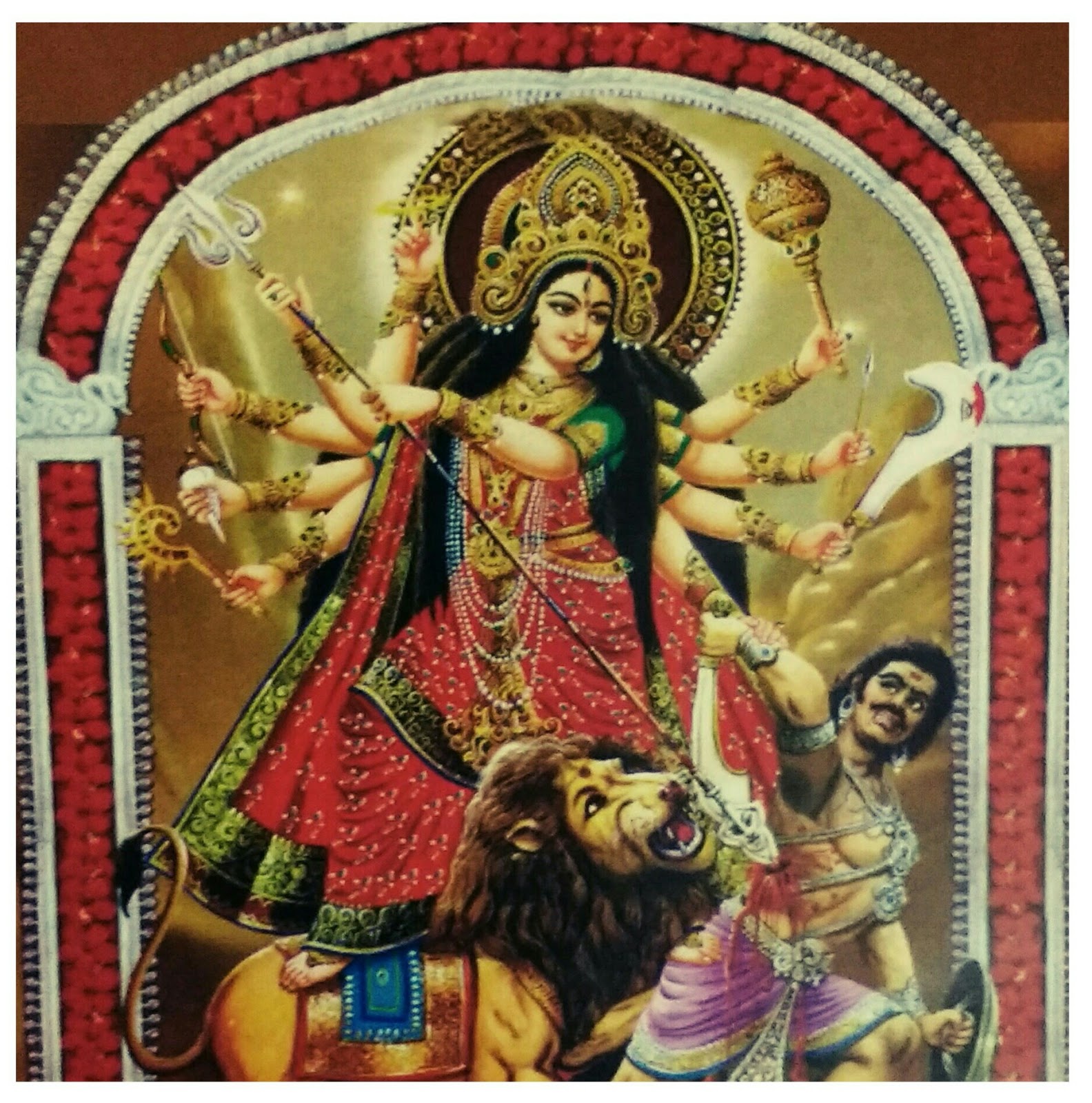
The festival is celebrated to worship the Goddess as the destroyer of evil and protector of people in her different forms of appearance. She is mainly worshipped in three most popular forms as the embodiment of Power/Force (Durga, Parvati), Wealth/Prosperity, and Wisdom/Education.


9 Forms of Durga

Chronologically, the following are the nine forms of the Goddess (or Devi as referred to in Hindu scriptures) according to citations found in many texts.

1) Devi Adi Parashakti or Siddhidhatri:
This is a pure form of energy with no shape, which Lord Shiva worshipped before starting the creation. She appeared on the left side of Shiva. She sits on a lotus and rides on a lion holding Shank, Chakra, Gada, and a Lotus in each of her four hands.

2) Devi Kushmanda:
After taking the form of Siddhidhatri, the Goddess lived inside the Sun so as to release some of the Sun's energy to the Universe and provide life to living beings. She has eight hands holding a Kamandalu, Bow, Arrow, and Kamal with her right hand and Chakra, Gada, Japa Mala, and Pot of Nectar with her left hand. She also rides on a lion.

3) Devi Brahmacharini:
After Kushmanda's form, the Goddess took the form of a Brahmacharin born to Daksha Prajapati. She was supposed to marry Lord Shiva. But Daksha insults Shiva, and she gets self-immolated, vowing to marry Shiva in her next birth. She holds a Kamandalu and a Japa Mala in her hands and walks bare-footed.

4) Devi Shailaputri:
After self-immolation, she takes birth as Shailaputri (Daughter of a Mountain named Himalaya) to marry Shiva. She rides on a Bull, carrying a Trishul and a Lotus in her hands.

5) Devi Maha Gauri:
Shailaputri, after reaching her age of sixteen years, is believed to be extremely beautiful with a splendid and sparkling glow. So, she is called MahaGauri, meaning extremely beautiful. She also rides on a Bull with her four hands holding a Trishul in the right hand, A Damaru in the left hand, and making the Blessing sign with the other right hand and a gifting sign with the other left hand.

6) Devi Chandraghanta:
On marrying Lord Shiva, she begins wearing the half-moon sign on her forehead shaped in the form of a bell. So, she is known as Chandraghanta. She mounts a tigress with her ten hands. She holds the Arrow, Bow, Lotus, and Mala of her neck with four right hands, keeping the fifth hand in Abhayamudra (a blessing sign). She holds the Trishul, Gada, Sword, and Kamandalu in her four left hands, posting the fifth hand in a gifting sign (Varadamudra).

7) Devi Skanda Mata:
Skanda is the other name for Lord Kartikeya, the son of Shiva, Parvati. So, she is called Skanda Mata, meaning mother of Skanda. Skanda Mata rides on a fierce lion. She has four hands. She holds Lotus in her upper two hands and holds her son Skanda (who is a six-headed child) with her right hand. She keeps the other left hand in blessing mode.

8) Devi Katyayani:
Katyayani Mata was formed from the waves of anger exuded by all the Gods who were angry with the atrocities of the demons. She was entrusted with the task of killing Mahishasura and other demons. She is red in color and rides on a majestic lion. She holds a Lotus and Sword in her left hand and keeps both her right hands in blessing and bestowing modes.

9) Devi Kali:
This is the most fierce form of the Mother Goddess.
She is black in color and rides on a donkey, killing the deadly demons named Sumbha and Nisumbha in a very frightening manner. She holds both her right hands in Varada (gifting) and Abhaya (protecting) mudras and carries a huge Sword and fierce Iron hook in her left hand.


The Worshipping Sequence of the 9 Forms of Goddess Durga:

Day One: Shailaputri
Day Two: Brahmacharini
Day Three: Chandra Ghanta
Day Four: Kusmanda
Day Five: Skandamata
Day Six: Katyayani
Day Seven: Kali Mata
Day Eight: MahaGauri/ Maa Durga
Day Nine: Sidhidhatri

Navaratri in Vaishnava Sampradayam

In the Vaishnava sampradayam, these Sharad Navaratri celebrations are centered around Mahalakshmi and her nine forms. Each day, Lakshmidevi is decorated in unique forms and worshiped as such. 

Here is a glimpse of these celebrations as announced by ramanuja.org for the year 2024.


For more comprehensive details of Dussehra celebrations like Ram Leela and Vijaya Dashami, you may like to visit this article with full details at this link.
https://vnktchari.blogspot.in/2013/10/dussehra-festival-celebrating-victory.html#.Wc4Rwo-Cy1t

Wednesday, October 9, 2013

Dussehra : A Festival of Goddess Durga and Victory of Good over Bad


Dussehra is one of the most important festivals celebrated in India by people of all states. It is a festival of ten days which falls in the Hindu month of Ashwin or Aswayuja masa, occurring generally during the period of the second half of September to the first half of October each year. It is world-famous as a celebration of Vijayadashami or the Sharad Navaratra festival. This is because of the fact that the festival is celebrated for 9 days/ nights, and on the tenth day is a festive occasion.


The festival begins on the 1st day of Ashwin, which is the beginning of the Sharad season, to the 10th day of Ashwin, which is known as Dashami. So, the last day of the festival is called Vijaya Dashami, referring to the victory of Good over the evil demons.

'Dussehra' is derived from the original 'Dashahara', which has some meaning in itself. It is the combination of two Sanskrit words, 'Dasha' and 'Hara', meaning destruction of ten.

It is the destruction of ten bad qualities that are possessed by demons. Some people mean 'Dussehra', denoting a festival of ten days also. Vijayadashami refers to the victory of Goddess Shakti or Durga over Mahishasura (a buffalo-shaped demon) on the tenth day of fighting with him. Goddess Durga killed many other demons also and brought safety and happiness to the people, including devas or the angels.

How to Celebrate Dussehra or Durga Navaratri


Maa Durga, Kali or Shakti Puja

In the homes, Dussehra or Vijayadasami is generally celebrated for 3 days only, starting from the 8th day or Ashtami to the 10th day or Dashami.

On Ashtami day, Goddess Durga is worshipped, and especially ladies keep vrat (a type of spiritual control or austerity), taking food only at one time on that day and on the 9th day also.

They believe that the Goddess gets pleased when sincerely worshipped by keeping fast. And, she will bestow them with shakti or power to overcome all bad things. Further, she grants good health and prosperity of their family members.

On the ninth day, other forms of Durga, like Saraswathi, Lakshmi, Kali, are also worshipped to be bestowed with the powers of education, wealth, power, and an overall well-being of the family.

On the 10th day, it is celebrated as a general festival, wearing new clothes, visiting temples, preparing various dishes and sweets, and enjoying the food and festive atmosphere with family and friends.

For awareness about Navratri celebrations, you may also visit this article:
https://vnktchari.blogspot.in/2017/09/navratri-celebrations-its-meaning-and.html#.Wc4TJY-Cy1s

Dussehra at Public Places
  
This festival is celebrated publicly also by erecting pandals or tents at public open spaces or street junctions or playgrounds, and clubs, etc., all over India in different styles according to their traditions. Idols of Goddess Durga (Kali or Shakti), Saraswati, Lakshmi, Ganesha, Kartikeya, etc, are placed on elevated platforms and worshipped.

These public pandals are erected with the contributions and help of donations collected from the colony people at each place. All the people visit these celebrations wearing new clothes, especially the children and girls.

Generally, the pooja gets started on the 6th day evening by installing the statues of the Goddesses along with Ganesha. The Ganesha puja is performed thereafter for the prevention of any hindrances in the worship.

On the seventh day, the Saraswati Puja (Goddess of Knowledge) is performed first, and thereafter Durga Puja. The Durga Puja is carried on up to the 9th day, and the tenth day is a general worship done for the Goddess before removing the idols for immersion in waters.

Normal worship goes both times (in the morning and evening), and then arati is done in the evenings, mostly popular among Bengalis, who perform pooja with dance-like performances, holding the earthen bowls containing burning coal or dung cakes with incense powder sprinkled over it, emitting a good, divinely smelling odor with smoke all over the pandal. They make the dancing steps in such a rhythm, matching the beatings of the holy music.

It is a very marvelous and thrilling experience both for the performers and the viewers. During this performance, all the devotees gather there to experience a thrilling feeling of union with the divine power.

Ramlila Performances

Vijayadashami is considered to be the day when Lord Rama fought with demon Ravana and won the battle by killing him and releasing Goddess Sita from his captivity. So to celebrate this occasion, the tradition of enacting plays from the Ramayana, illustrating these incidents, started from that period onwards. This practice of Ram Lila performances is most popular in Northern India. Ram Lila stages are erected at all colonies just like Durga puja pandals. Ramlila is usually held throughout the nights on all these ten days, starting late in the evenings to accommodate people attending Durga puja so that they can attend Ram Lila after returning from puja and after having dinner. These Ram Lila performances are enacted in a typical traditional style to resemble the real characters and environment of that age. On the tenth day, the effigies of Ravana, Kumbhakarna, and Meghnath are burnt with firecrackers, and people feel the joy of the destruction of evil.

Ram Nagar Ram Lila in Varanasi

Ram Nagar is a town near Varanasi in U.P., which is famous for Ram Lila celebrations. Originally, the Royal family of the Ramnagar kingdom started this festival to be celebrated publicly along with their public many centuries ago. Since then, it has grown to be widely popular year after year. It is celebrated for one full month with processions of Ramlila characters and scenes in stages by erecting pandals and stages at many places of Ramnagar and Varanasi by crossing the river Ganga at a place connecting Ramnagar Fort with Lanka or BHU of Varanasi. They consider Ramnagar as the kingdom of Rama and Lanka as the abode of the demon king Ravana, and the bridge on the river Ganga to be the bridge built by Rama's army, consisting of vanaras of whom Hanuman was the leader. Full Ramayana scenes are very beautifully and artistically presented by these performers during one full month all over Ramnagar and Varanasi.

Dollhouse or Bommala Koluvu (Kolu) Decorations for Dussehra

In Southern India, it is customary to decorate their houses with small idols or miniatures of the characters of Ramayana, Mahabharata, and other Gods and Goddesses along with other dolls on this festival. Some people treat this practice with a competitive spirit, exhibiting their full skills and tastes in their decorations. People visit one another's places to witness these decorations. It is known as Bommala Koluvu in Andhra Pradesh and as Kolu in Tamil Nadu.

Performance by school children 
Schools take part in the Dasara celebrations by dressing students as characters of Ramayana or some other ideal characters and take them in procession on the streets and to the children's houses to showcase their talents and improve extra-curricular activities. Besides, Saraswati pujas are organized in schools on the Navami or ninth day, and books are kept in front of Saraswati to bestow them with good knowledge and merit.

Overall, Dasara or Durga Navaratri is a festival of victory of good over evil, celebrated all over India and in many parts of the world with different cultures and styles. You come to know many lifestyles of the people by observing these celebrations, both of the contemporary period as well as epic period.