Sunday, May 28, 2017

Udaka Shanti Pooja | Importance and Purpose of Udaka Shanthi Puja


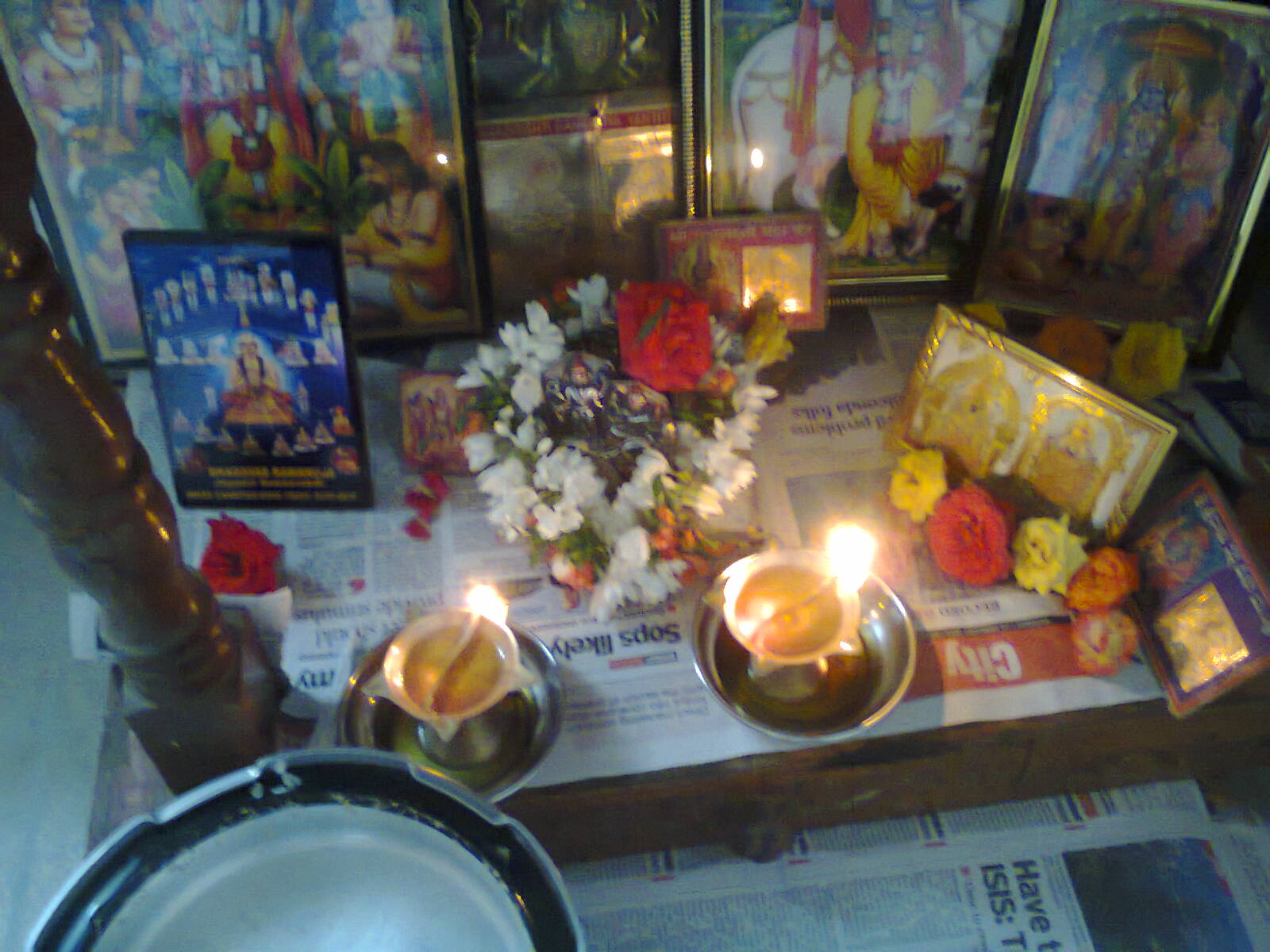
I recently had the privilege to attend one Upanayanam ceremony (जनेऊ or ఉపనయనము ) where I witnessed the full Udaka Shanti ritual.

Udaka Shanti is one very important ritual performed by all Hindu people.

It is a ritual through which water gets purified and becomes auspicious through the chanting of mantras and invitation of Lord of Water Varuna and other various Gods and Goddesses. The purified water is considered as equal to the celestial nectar and the holy waters of the Holi River Ganga. The water is used as Ganga Jal for all purposes.

The chief purpose of Udaka Shanti is to protect the house or the family performing this ritual and all its members from evil spirits and bad happenings.

Normal water that is being used in the household procured from taps, wells or from rivers is collected in a small pot-like vessel made up either of copper, bronze, five metals, or even of silver and gold. The pot gets applied with wet turmeric powder and kumkum dots and is placed on a cleaned floor that is decorated with rangoli. Rice is spread over the spot before placing the pot on it. A coconut is placed over that pot vertically after arranging mango leaves around it into the water. This is known as the Kalasha.

Two oil lamps are placed on either side of the Kalash and Mantras from Yajurveda are recited invoking Gods and Goddesses. Flowers are also offered during worship. The recitation of mantras takes around two hours time after which dhoop (agarbatti), deepam, and naivedyam are offered to the Kalash and the water gets sprinkled on the heads of people performing the ritual as well as on the heads of all those who attend the function. This signifies that all of them are purified and bestowed with the blessings of God.

The water from the Kalash is sprinkled in all the rooms of the house also to protect the house and the people in it from all evil spirits. People will take bath by adding some drops of that worshiped water for performing any auspicious ceremonies and functions.

If anybody is interested in reading or viewing these mantras, the same is available at this link-
http://sanskritdocuments.org/doc_veda/Udaka_Shanthi.pdf

Thursday, January 26, 2017

Republic Day Celebration and its Specialty for Me | India's Republic Day

Happy Republic Day to all of you, my Dears.


Republic Day is celebrated by Indians to mark the occasion of India being proclaimed as a Republic from this 26th January Day of the year in 1950.

A "Republic" refers to the form of government where governing power resides with the elected representatives of the people of the country. The elections are conducted throughout the country in which all people above the age of some minimum age limit (either 18 or any other limit that is fixed by different countries as their norms) have the voting power to elect leaders to govern them. The whole country is divided into states or regions and each state or region has many constituencies within them for governing purpose. Each constituency is contested by many candidates of different political parties and one of them gets elected for that constituency according to the number of votes scored by him. These winning candidates again elect their leaders as CM of a particular state. The CM forms his government with the approval of the elected candidates by selecting the other ministers. The same thing happens for electing the country's central government also. All the voters elect their leaders for the Parliament through general elections. The elected parliamentarians, thereafter, elect their leader who becomes the Prime Minister of the country. And, he forms the central government by choosing the ministers with the approval of other elected leaders.

The government thus elected by the people of the Republic governs the state or country according to some constitution formed by the laws and mutual consent of the peoples' representatives. Our first constitution was prepared by B.R. Ambedkar and came into force with effect from January 26, 1950.

The first general elections in our country were held in November 1951 according to the new constitution of India after her becoming a Republic. The elections continued until February 1952 and the first Parliament got announced declaring Jawahar Lal Nehru as the First PM of Republic India.

So, we are celebrating each and every year on this Date, 26 January, as the Republic Day.

We salute our Country. We salute our martyrs who fought for our Independence and gifted us the independence on 15th August 1947.

These national festivals remind me of my forefathers who have also fought for the Independence of our country by taking an active part in the independence struggles and movements. My grandfather used to be referred to as Gandhiji of a village named Tallarevu near Kakinada of Andhra Pradesh during an early 20th century. My uncles were born while my grandfather was in jail. So, they were named as Satyagrahacharya (born during the non-cooperation movement) and as Pathakacharya        ('pataak' means Flag and it refers to the Indian National Flag).

Our country abodes people of different cultures speaking different languages and yet they are united and bonded. They love to be called as Indians and feel always proud to be Indians.

We salute our National Flag by hoisting it with great respect and pride. We salute our soldiers and award gallantry awards to them. We salute our Scientists, Litterateurs, and all other great personalities whoever contributed and are contributing to the growth and development of our country in each and every field.

We celebrate the festival with sweets and flowers.

This festival is further associated with my God also for me and my family.

Just as it brought a people's republic and happiness for the people of our country, our God arrived in our house on this day some more than 30 years ago in the form of tiny silver idols. We installed the idols of Lord Narayana and Goddess Sri Lakshmi on this day in a small wooden temple in our puja room on that day in 1984 or 85. From that day, each year, we are celebrating this day as the birthday of our God also besides celebrating the Republic Day.

So, January 26 is a very special day for me in both the cases.

Friday, January 13, 2017

Thiruppavai- Paasuram 30 - "Vanga kadal kadaindha Maadhavanai Keshavanai"


This "vangakkadal kadaintha" is the last of the literary garland of thirty paasurams composed by Goda Devi (Andal) while performing her Pavai nombu ritual. She designed this ritual to provide people with an accessible spiritual path to liberation from all worldly sorrows. She explains where she got this idea and how she designed it. She affirms that whoever follows her path by performing this ritual will reap the fruits of the ritual (just as she did) through the blessings of Lord Vishnu or Sriman Narayana, by observing Dhanurmasam or the sacred Pavai Vrat.

Tiruppavai- Paasuram 30


Vanga kkadal kadaindha Maadhavanai KEsavanai
ThingaL thirumugaththu sey izhayaar senRu iRainji
Anga paRai konda vaaRtai aNi pudhuvai
Paingamala thaNNeriyal bhattar piraan kOdai sonna
Sanga thamizh maalai muppadhum thappaamE
Ingu ipparisuraippaar eerirandu maalvarai thOL
Sengan Thirumugaththu Selva Thirumaalaal
Engum thiruvaruL petRu iNbuRuvar embaavaay


Meaning of this paasuram

Thus, the gopis who are shining moon-like faced (adorned by new clothes and ornaments), attained moksha by approaching the Lord, who is called Madhavan (because of possessing Goddess Lakshmi obtained during the churning of the Milky Ocean) and Keshavan (because of the curly hair head).

Here, the gopikas referred to by Goda Devi are not her companions. Because she was referring to the times of Sri Krishna's incarnation. She learnt through scriptures regarding a similar ritual performed by the gopikas of Gokul and got inspiration from them.  
 
That story of their attaining moksha is told by Goda, who is the daughter of Bhattar piraan (a superior or great person is referred to as Piraan), who used to wear the garlands prepared with Tulasi and lotus beads around his neck.

Whoever recites this garland of Tamil songs (especially recited in groups) honestly without any break will obtain eternal bliss, now itself and thereafter, through the overwhelming grace of that Lord, who has beautiful eyes with a red hue and divinely faced and glorious with all good qualities.

Inner, in-depth meaning of this Thiruppavai Paasuram 30

Andal tells people, through this last paasuram, about her authorship and about her father cum teacher (Achaaryan), and regarding the benefit of performing this Pavai nonbu or Vrat. She also hints at the supreme qualities and benevolence of God, who will definitely bless His devotees with the eternal bliss or moksha.

It asserts the importance and valuable worthiness of the Thiruppavai, the authenticity of its writer, who is the disciple of a great, worthy Achaaryan, the quality and essence of the contents of this work, and the great benefits obtained by reciting or hearing of these paasurams with sincere honesty.

A concluding paragraph
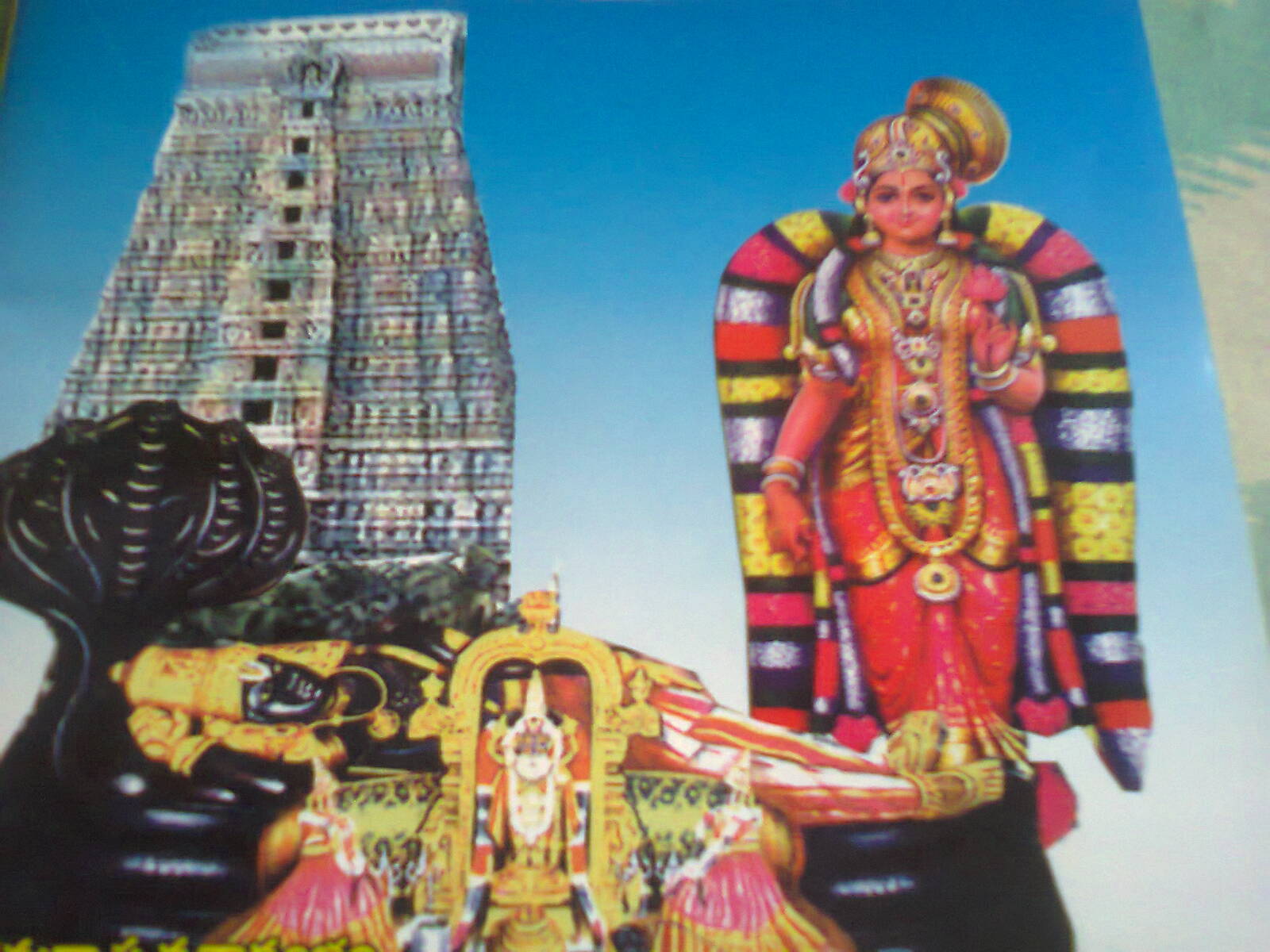
Goda Devi performed the Vrat of Thiruppavai by preparing a garland of 30 paasurams in this manner and dedicating one paasuram each day to Lord Vatapatra Shaayi at Srivilliputtur temple. After completion of this penance by Goda Devi, the Lord, one day, appeared in her father's dreams and also in the dreams of the King and a temple priest of the Sri Rangam Temple, and instructed them to arrange for the marriage of Goda Devi with Himself, the Lord, inside that temple of Sri Rangam. So, Goda married God and became an idol to his side, and has been worshiped as Andal since that time.

For the full story of Andal, read at this link.

Thursday, January 12, 2017

Thiruppavai- Paasuram 29 - "SitRum siRukaale vandu"


Andal asserts through this paasuram her determination and commitment to observe the penance or performance of Paavai to attain their goal of moksha. She reveals her wish to serve him throughout the coming seven births and forever. To accomplish this wish, she requests him to keep away all other desires and thoughts from their minds.


Tiruppavai- Paasuram 29


SitRum siRu kaalE vandhu unnai sEviththu unn
PotRaamarai adiyE pOtRum poruL kELaay
Pettam meyuththu unnum kulaththil piRandhu nee
KuttEval engaLai koLLaamal pOgaadhu
Ittai paRai koLvaan anRu kaaN Govindhaa
Ettaikkum EzhEL piravikkum undhannOdu
UtROmE yaavOm unakkE naam aatseyivOm
MatRainam KaamangaL maatRelOr embaavaay

Meaning of this Paasuram

Oh, Lord! Daily, we come early in the morning, before dawn, to visit you (to have a darshan of you). 

After the darshan bhaagyam, we are pleased and sing prayers at your lotus-like feet in great pleasure.

We are blessed to have you born in our clan (even though we are very ordinary beings). 

Due to this attachment with you and our utter ignorance, you cannot escape without blessing us.

Oh, Govindha! We are not simply here to get the Parai from you.

We want to maintain an eternal close relationship with you throughout the coming seven births and beyond, so that we can perform our humble services to you in all ages.

Oh, Lord! Please remove all the obstacles (other worldly desires faced by us) and fulfill our desires.

Inner, in-depth meaning of this Thiruppavai Paasuram 29

Through this paasuram in the voice of gopis, Goda Devi spreads the message that those who discard all their material desires and enjoyments and indulge in the sincere services of God with pure love, attachment, and submission, seeking no returns from Him for those services rendered, will be rewarded by the Lord, on his own, without your requests. Because he loves his true devotees and grants them the permanent bliss of moksha, removing all the physical barriers coming between Him and His devotees.

Wednesday, January 11, 2017

Thiruppavai- Paasuram 28 - "Karavaigal pin senru"


In this paasuram, the gopikas acknowledge their ignorance as they are simple cattle feeders and do not know what is good or bad, and ask for his forgiveness if they committed any mistakes by addressing him in short names. 

They further state that their lives have been purified by his birth in their clan and seek his grace and union.


Paasuram 28


KaRavaigaL pin senru kaanam serndhu uNbOm
ARivonRum illaadha aay kulaththu undhannai
PiRavi peRundhanai puNNiyam yaam udayOm
KuRai onRum illaadha Kovindhaa undhannOdu
uRavEl namakku ingu ozhikka ozhiyaadhu
ARiyaadha piLLaigaLOm anbinaal undhannai
SiRu pEr azhaiththanamum seeRi aruzhaadhE
IRaivaa nee thaaraay paRaiElOr embaavaay

Meaning of this paasuram

Oh, Krishna! We are very simple, ignorant people walking behind the cattle to the forests and eating there without even washing our hands.

In such a clan, you have arrived taking your birth. This is our great fortune. Our lives have been blessed by that.

Oh, Govinda! You are complete with all qualities and so capable of removing all our weaknesses. Due to your grace, we are abundant in our lives.
 
This relationship between us cannot be undone even if we try to break or undo it.

We are like little children, unaware of any manners. So, kindly forgive us as we have addressed you with little or short names until now. Don't be angry with us.

Oh God, bless us with the PaRai (moksha).

Inner, in-depth meaning of this Thiruppavai Paasuram 28

Through this paasuram, Andal refers to the ignorance of people in realizing the greatness of God.
We are unaware of His paramathmathathvam and His being the only savior of all our problems. 

But once we get some hints and glimpses of His image, we can recognize His Omnipotence and Omniscience qualities. 

Then, we discard all our lust for material pleasures and long for His union. We realize that we are too inferior and discard all our ego and pride to seek His pardon and refuge.